Why garden designers struggle to talk about pricing (and what actually works)
Of all the conversations we have with garden designers, at Wildings Studio, pricing comes up more than any other. It doesn't matter whether we're talking to someone newly qualified or a designer with an RHS Chelsea medal on their shelf. Everyone wants to know the same thing: am I charging the right amount?
That question usually comes wrapped in a request for reassurance. Designers want to know they're in the right ballpark compared with their peers. But almost no one in the industry actually talks about fees openly. Websites are silent on pricing. Conversations between designers tend to stay vague. It's one of the most secretive corners of a profession built on transparency with clients.
So designers end up guessing, comparing themselves to competitors they don't fully understand, and hoping their numbers hold up.
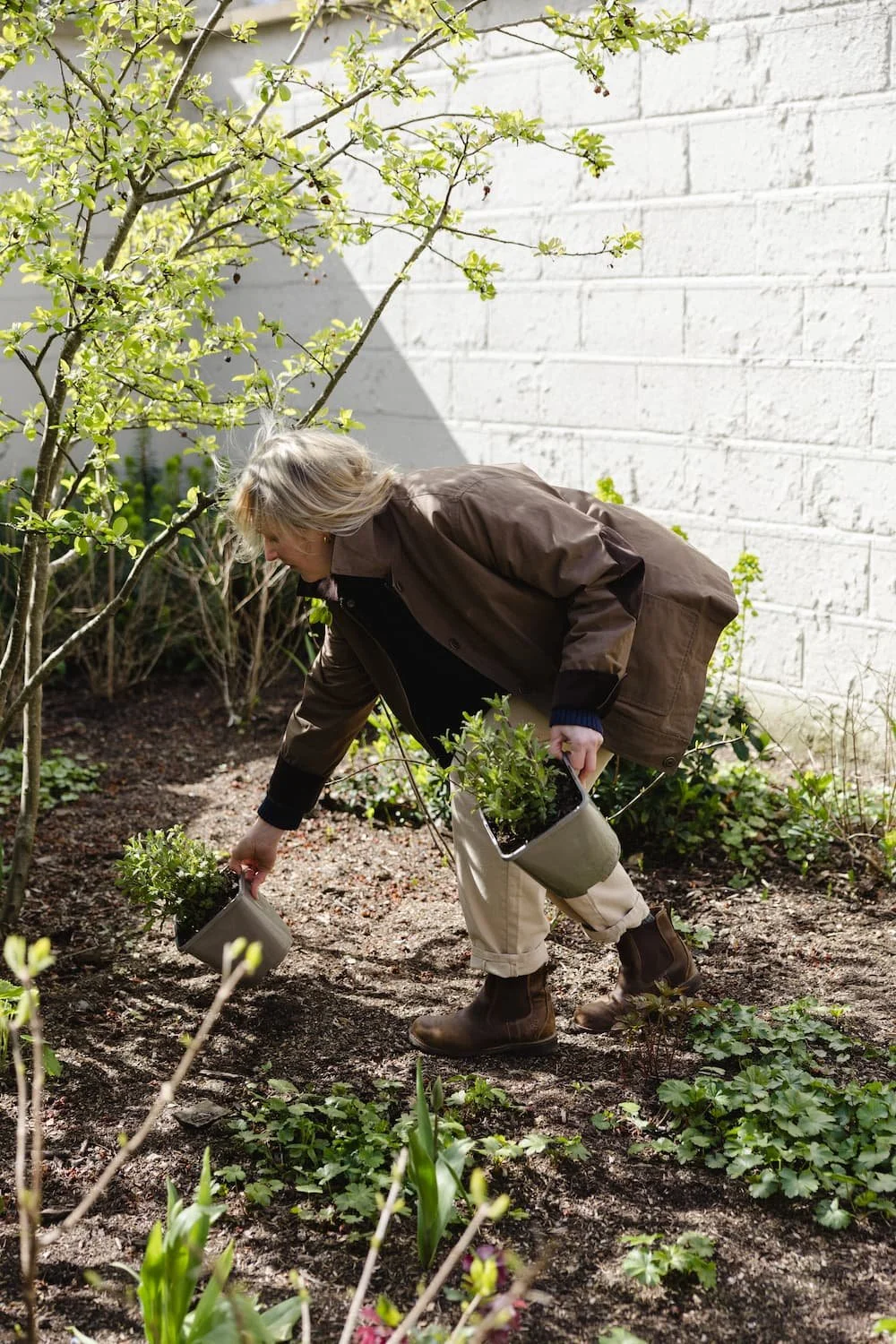
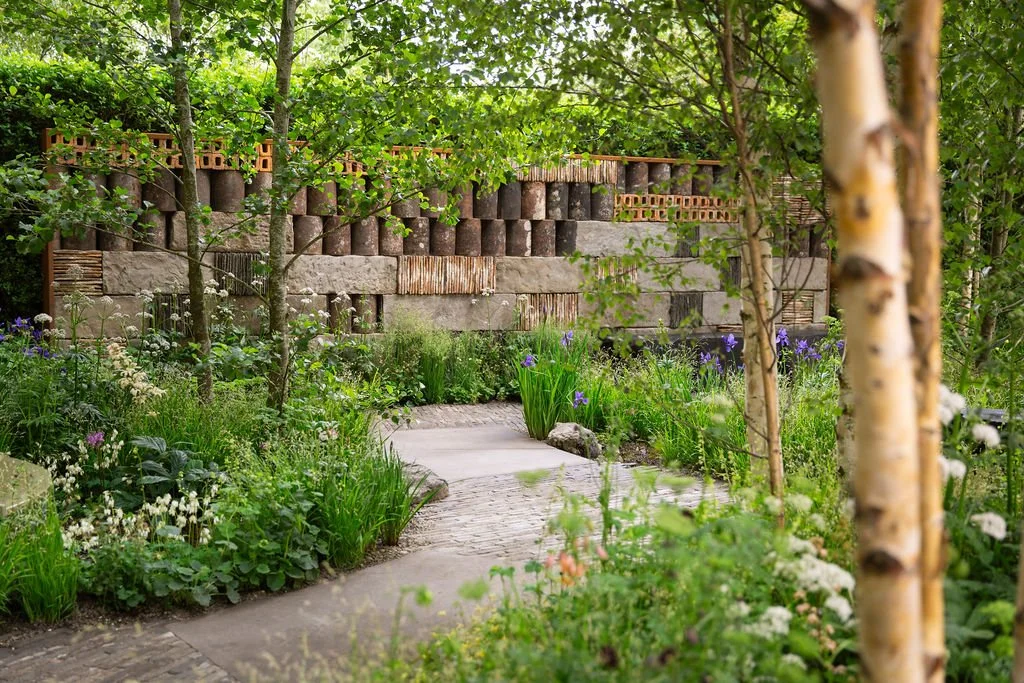
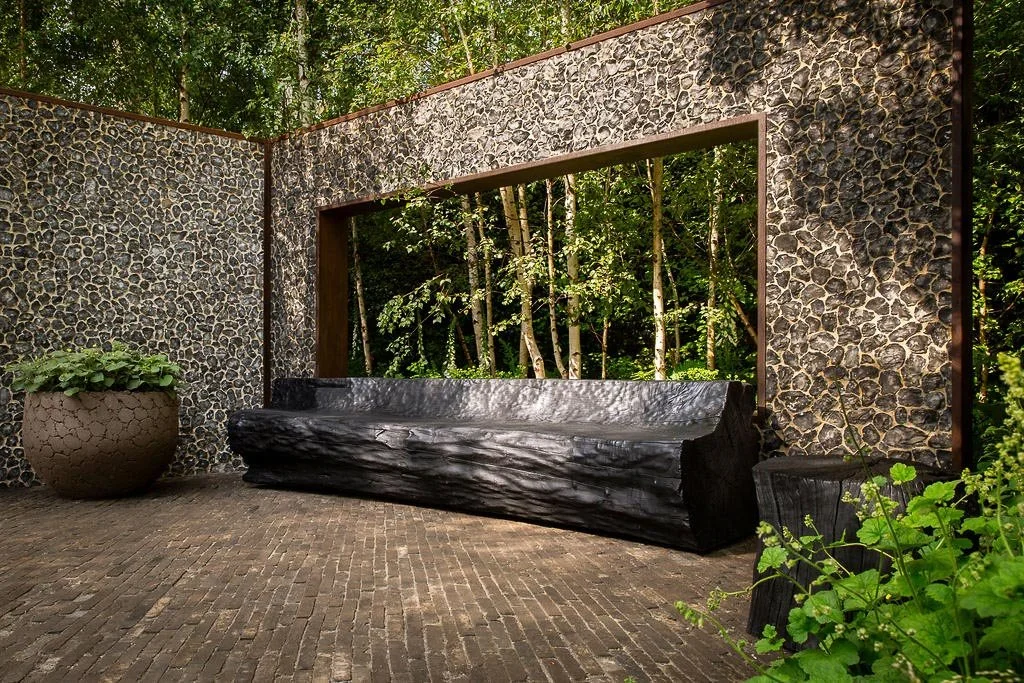
Project: Greenwild / Photography: Jade Alana
Can't you just tell me what they charge?
I talk to so many garden designers who feel genuinely wobbly about their pricing. Many ask me to share what other design studios are charging so they can check their own numbers against it.
I don’t do that.
I won't break the confidentiality of what clients have shared about their own commercial fees.
But I can tell you that knowing what another studio charges for ‘full garden design’ isn’t going to be very helpful for your business. Without knowing the full picture of a business, a number on its own tells you very little. What you offer in a package for full garden design, and another studio can be wildly different. Given you will have different overheads, qualifications, experience and customers knocking on the door we need to unpack what will actually help you to have confidence in your own fees.
The 15% rule isn't the answer
For many of our clients, they are involved in some way or another with accredited garden and landscape bodies. Many of their seminars on pricing offer a rough benchmark: design or build fees at around 10-15% of overall project spend. It's a well-meaning starting point and for some businesses it works perfectly well.
But in practice it doesn't hold up to scrutiny.
Two designers working on projects of identical value could have completely different workloads. One might visit site three times and produce a simple planting plan. Another might carry out twelve visits, full 3D renders and detailed construction drawings. Charging both at 15% ignores the fact that one project takes three times the effort of the other.
There's also the problem of small budgets. If total project spend is £15,000, a 15% fee gives you £2,250 to cover a full design process, site visits, drawings and client management. For most designers, that's a loss.
And no two gardens are the same. Every site brings its own challenges, every client has different needs and scope can vary wildly even on gardens of a similar size. This is where a percentage model earns some credit. Larger budgets often do come with more complex sites and heavier scope, so the correlation isn't meaningless. It just isn't reliable enough to build a fee structure on, since plenty of small budgets carry big complications and plenty of large ones are straightforward.
A percentage of spend measures the client's budget, not the designer's time, skill or overheads. It was never designed to answer the question designers are actually asking, which is whether their business model is sustainable.
Build your pricing from the ground up
The only reliable way to price with confidence is to build your fee from the bottom up, based on your own process and your own numbers, not an industry average. You have to know your process, the time it takes you and how you like to run your business.
Step 1: How many hours things take
Start by breaking your process into its component parts. Here are just a few off the top of my head:
Email admin to arrange consultation (x hours)
Initial consultation (x hours), plus mileage and travel time (45p/mile + x hours travel)
Fee proposal (x hours)
Concept design (x hours), including a call to go through the concept and revisions to it (x hours each)
3D visualisation (£x per render)
Technical design (x hours), including lighting designer or structural engineer consultation where needed
Detailed planting plans (x hours), including a call to go through the plans and any revisions (x hours each)
Tender pack (x hours), including admin and emails fielding questions, and client liaison to review the pack (x hours each)
Site visits and project monitoring: number of visits x hours per visit, plus travel to site (45p/mile + x hours travel)
Estimate honestly how long each stage actually takes you, not how long it should take in theory. Assign an hourly rate to that time, one that reflects your experience and covers what you need to earn.
Step 2 - Know your fixed costs
From there, add your fixed costs.
Anything you outsource, such as 3D renders or site analysis surveys. If you always provide six 3D renders for an average urban garden design, add the fee you usually pay your render team and mark it up to cover your admin time around that.
Software subscriptions, insurance, printing, travel and studio overheads if you have them. These costs don't disappear because a project is small, so they need to be accounted for in every fee you quote.
Step 3 - Build in flex
Every project throws up something unplanned, whether that's an extra site visit, a client who changes their mind twice or a contractor who needs more hand-holding than expected. Decide how much contingency you build into your pricing model as standard, rather than absorbing it as unpaid time every time it happens, or having to negotiate extra site visits on an hourly rate.
Once you've done this, you have a genuine base cost per project, or at least a range for simple and more complex projects. From there, you can make an informed decision about whether to increase your hourly rate to build in profit, or whether there's room to bring it down and stay competitive. Either way, you'll know precisely what you're earning per project, rather than hoping the maths works out at the end.
Clients almost always want more than they can afford. But if you know what it takes to deliver a project to the standard you're happy with, price your service to include every element you need to do the job properly. This is another reason the 15% model is tricky. Clients rarely know in advance what garden design costs, are often surprised by how expensive gardens run to, and designers end up constantly educating them on pricing as a result. You don't want to be justifying your fee at every stage of a project, or find a client deciding, partway through, that they'll handle site monitoring themselves to save money.
Know what the market will tolerate
Working out your cost per project tells you what you need to charge. It doesn't tell you what you can actually charge, and that's a different question entirely.
Two designers can run the same process, at the same hourly rate, with the same overheads, and still land on very different fees, because one of them can justify a higher number to the clients they get in front of and the other can't. This isn't the same as the industry secrecy we talked about earlier. It has nothing to do with copying what a competitor charges. It's about whether your reputation, portfolio and positioning give a client a reason to say yes to your number specifically.
A designer with RHS Chelsea credentials, a strong body of published work and a client base used to paying for that level of pedigree can charge a fee that would feel completely unjustifiable coming from someone newly qualified, working on their first few gardens, or (as is often the case) they have worked with big name studios and have delivered on amazing projects, but can’t put this work in their portfolio. That's not unfair. It's the market recognising that the fee comes with something beyond the hours logged, whether that's trust, track record or a name a client can mention to their friends.
This works the other way too. If you're consistently having to talk clients down from objecting to your fee, or feeling like you're negotiating rather than simply presenting a number, that's worth paying attention to. It might mean your fee is genuinely too high for the clients you're currently attracting. Just as often, though, it means you haven't yet built the case for your fee clearly enough, through your portfolio, your website or the way you talk about your process, so a fee that's entirely fair still feels like a stretch to justify.
The two pieces have to work together. Cost your process properly so you know your number is sound. Then be honest about whether you can currently get that number in front of the right clients and have them agree to it without a fight. If you can't, the answer usually isn't to lower your fee. It's to work out what needs to change, in your positioning, your portfolio or the clients you're targeting, so the fee you need becomes the fee they expect to pay.
Know your numbers, know your capacity
Once you understand what a single project actually costs you in time and money, a bigger question opens up: how many of these can you realistically take on in a year?
This is where pricing stops being about a single fee and starts being about the shape of your whole business. If your process genuinely requires unlimited site visits and six different concept options, you can only take on so many clients before something breaks, whether that's your quality of work or your own capacity.
It's also the point where many designers realise they need support, whether that's a junior designer to take on planting plans, an admin assistant to manage correspondence and scheduling, or a virtual assistant to handle the parts of the business that eat time without adding creative value. Bringing in the right support isn't an added cost to absorb, it's what allows you to protect the parts of the work that matter most to you and hand off the parts that drain you.
When was the last time you asked yourself which parts of a project genuinely energise you, and which ones you dread? The tasks that drain your energy still cost you time, even if you don't think of them as billable. Understanding that balance is as much a part of pricing as your hourly rate. A fee structure that looks sound on paper but leaves you burnt out by project three isn't sustainable, however well it's calculated.
Confidence comes from clarity, not comparison
The reassurance most designers are looking for isn't really "am I charging what everyone else charges." It's "can I explain and stand behind my own numbers." Those are very different questions and I’d argue that the second one is far more important.
You'll never know exactly what a competitor's process involves, what their overheads look like or how many hours they genuinely put in against a fee. Comparing yourself to a figure you can't verify will always leave you uncertain. But building your fee from your own real process, your own real time and your own real costs gives you something solid to stand on, whatever anyone else is charging.
Ultimately, it’s that which will bring your confidence. Not whether you are charging more or charging less, but charging with a clear understanding of exactly what your fee represents, and the confidence that comes from knowing the number is building a business that works for you and brings the right results.
About the author:
Rachael Cox is the co-founder of Wildings Studio, a branding and website design studio helping garden designers build stronger brands and websites.
Through Wildings Studio, Rachael has worked with garden designers and landscape studios, helping them overcome the challenge of standing out in a saturated market while attracting clients who value their expertise.
In this article, Rachael shares her perspective on pricing garden design services with confidence, based on her experience helping creative businesses communicate their value, position themselves more effectively and build brands that support sustainable fees.
Rachael writes regularly about branding and website design through the Wildings Studio blog.

















In this article:
Why garden designers struggle with pricing, and what actually works
Can’t you just tell me what they charge?
Why the 15% rule isn’t the answer
Build your pricing from the ground up
Know what the market will tolerate
Know your numbers, know your capacity
Confidence comes from clarity, not comparison
Free download: Garden & Landscape Designers Field Guide
About Wildings Studio
Thoughtful, beautiful branding and websites for design-led businesses
Wildings Studio is a branding and website design studio in South Devon, specialising in garden designers, landscape studios and other design-led businesses. Through projects such as Greenwild and conversations with designers across the industry, we've seen first-hand that pricing confidence comes from strong positioning as much as strong numbers. That's why our work focuses on helping creative businesses communicate their value, attract the right clients and build brands that support sustainable, profitable growth.