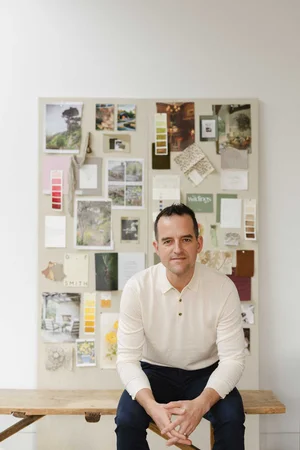
From dated to in-demand: Middlethorpe Interiors' rebrand
When a luxury interior design studio outgrows its brand, the website is usually the first thing to show it. Middlethorpe Interiors, a Yorkshire-based studio led by BIID-accredited designer Ann Allan, faced exactly this problem: award-winning work, a growing client base, and a website that still looked like it belonged to a different business. Here's how brand strategy and a full identity rebuild closed that gap.

Ann leading a creative meeting with her team in York
Key takeaways on rebranding for interior designers
A growing portfolio doesn't fix a dated brand. It exposes it. Middlethorpe's awards and bigger client base only made the old, masculine-leaning website look more out of step, not less
Hesitation has a cost you can measure. Ann held off commissioning new project photography because she didn't like her website, which meant her portfolio stalled while her actual business moved forward
The two obvious positioning routes in luxury interiors (ultra-modern, or soft-furnishings-turned-design) were both wrong for this studio. The right answer was a third position: an interiors practice that reads the building first rather than imposing a look on it
Brand strategy came before a single visual was drawn. Purpose, values, tone of voice and client profiles were locked down at The Newt in Somerset before Rachael touched the identity work
The palette wasn't picked from a trend board. Shambles Black, Abbey Brown and Howard Green were drawn from Yorkshire itself, which is partly why the brand reads as rooted rather than generic luxury
The identity didn't stop at digital. Foil-blocked business cards, candle labels and a signature scent concept meant the brand had to hold up in someone's hand, not just on a screen
Since launch, daily search impressions have grown by more than 60%, with the homepage now ranking strongly for high-intent local searches. That's the kind of result that comes from getting positioning right before the design started, not after
Meet Ann Allan, Yorkshire's best-kept interior design secret
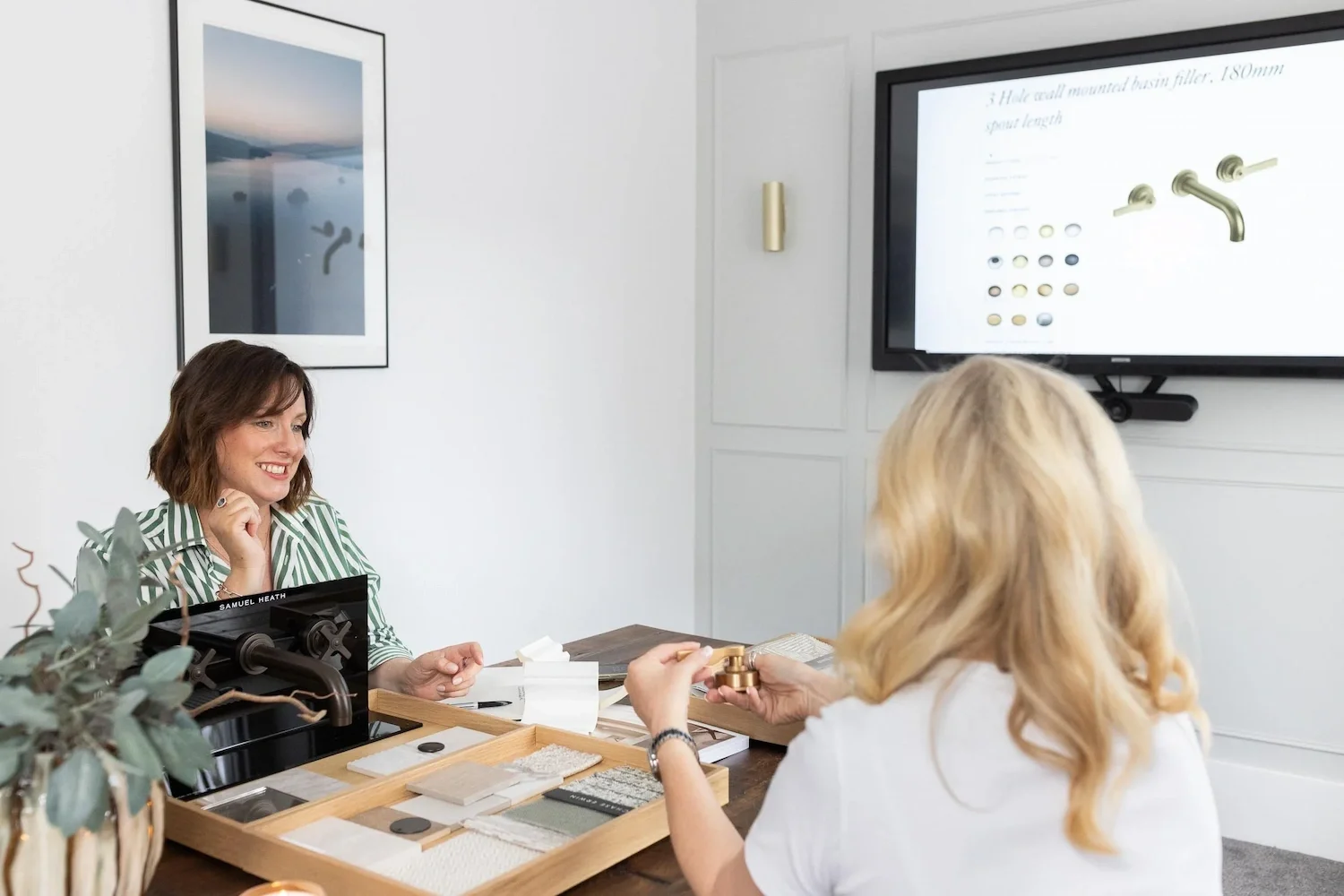
Ann discussing project details with a client
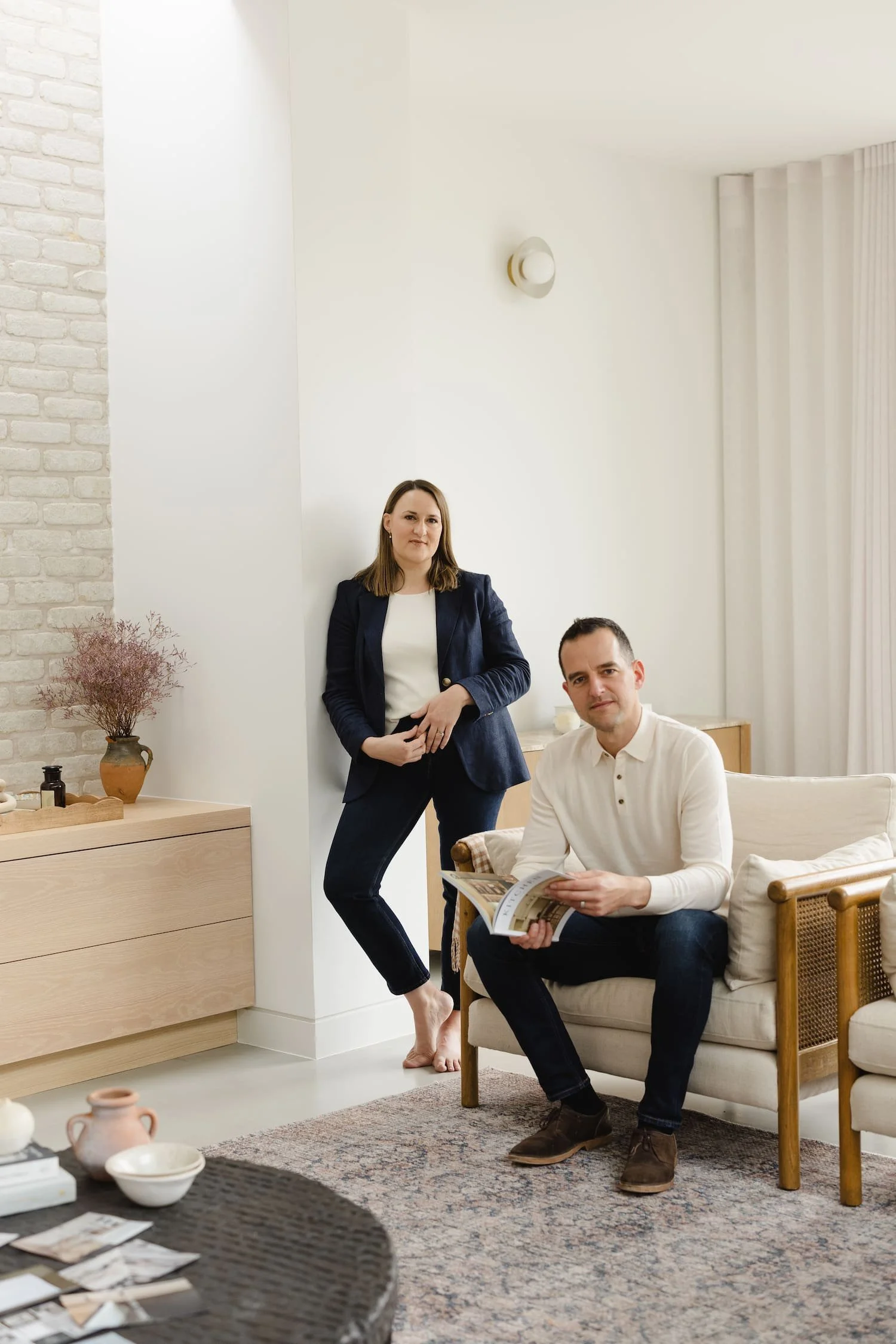
Ann had been running Middlethorpe Interiors from the heart of Yorkshire for several years. The studio she had built had quietly become a highly capable luxury interior design practice in the north of England: full turnkey projects, FF&E procurement, a growing team and a client base that had started asking her to work on their second homes as well as their primary residences.
Her interior design studio was earning a reputation in the industry; awards were coming in; and she was on track to attain a level of prestige. Ann was also a BIID-accredited designer with ambitions to pursue RIBA accreditation, planning a furniture range and thinking about a second office in the Yorkshire Dales.
By every measure that mattered, her business had outgrown its brand. However, her website was struggling to keep up, and was unlikely to catch up.
The takeaway: A business can outgrow its own brand long before its owner notices, and awards, accreditation and demand are the clearest signs it's happened.
The website was holding the business back
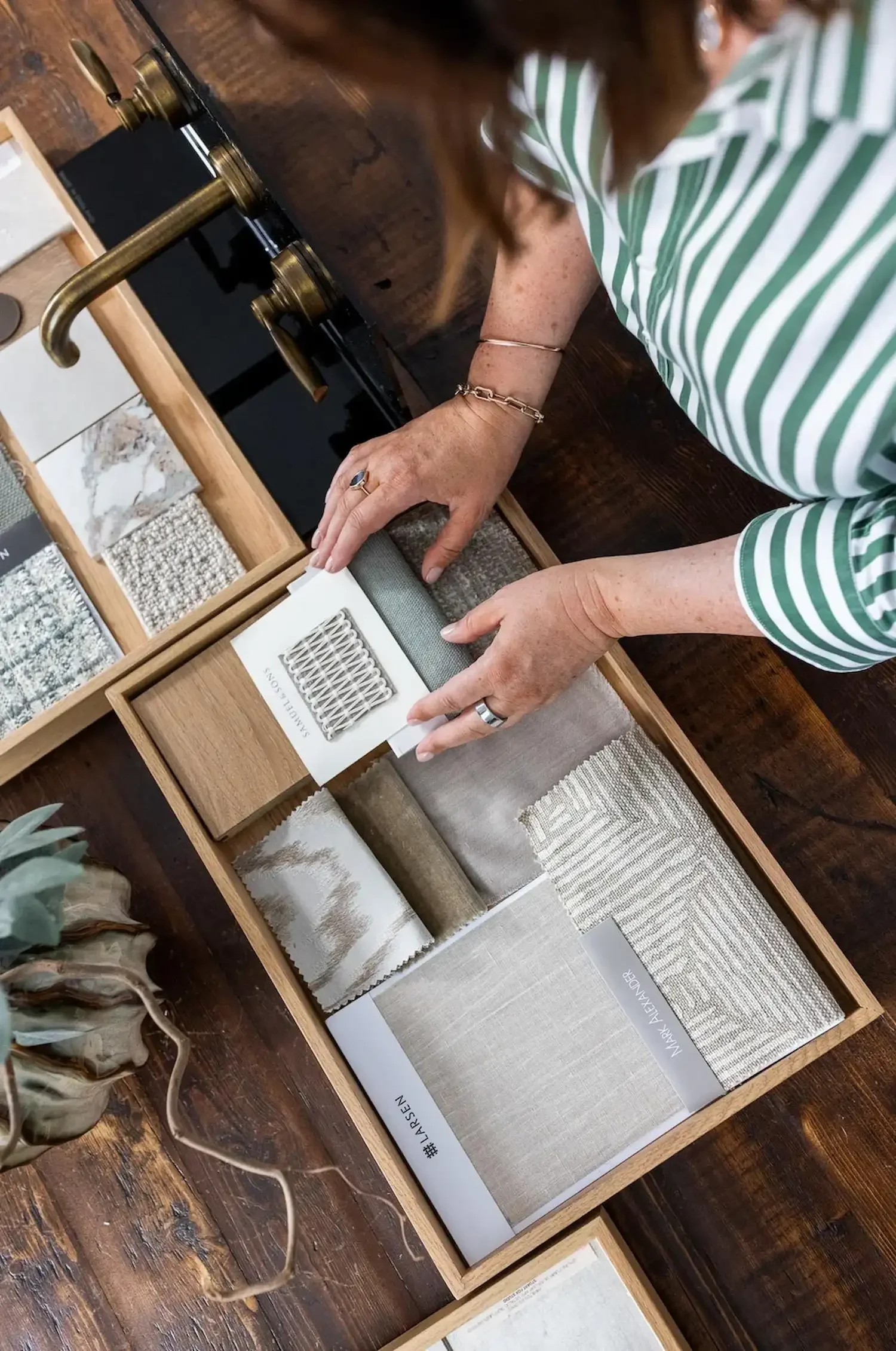
Ann selecting luxury fabric swatches
Ann's frustration wasn't dramatic: she didn't hate her existing brand outright, but every time she looked at her website, something felt off - not a position you want to be in as an interior designer.
She told us early on:
"When I look at the website it looks outdated. It feels very masculine, which was fine years ago when the majority of our clients were male."
The bigger challenge was practical: because of her website platform, making even small updates was difficult. She had beautiful projects ready to photograph, but couldn't bring herself to commission the shoots while her website looked the way it did.
"I have projects I want to photograph but am reluctant to proceed when I don't like how my website looks."
That hesitation is more damaging than many realise. Putting project photography on pause means your interior design portfolio doesn't grow. A portfolio that doesn't grow means your website stagnates further. The brand falls behind while the work moves forward.
There was also a positioning gap - the northern luxury interiors market is competitive and Ann knew it. She had looked carefully at the interior design studios around her and could see two dominant trends: the ultra-modern studio that creates beautiful but shiny interior design, shoehorned into a building without reference to what came before; and the soft furnishings business that's evolved into interior design: strong on curtains and wall coverings but lighter on full architectural vision.
Neither felt right for Middlethorpe because Ann's point of difference was something more considered: an interior design studio that reads the building, understands the client's lifestyle and creates something that's luxurious without being modern for the sake of it: practical and unpretentious, but her brand wasn't communicating any of that.
The takeaway: When a studio owner stops commissioning photography because they're embarrassed by their website, the brand has started actively costing the business work, not just failing to help it.
Brand strategy before brand identity, always
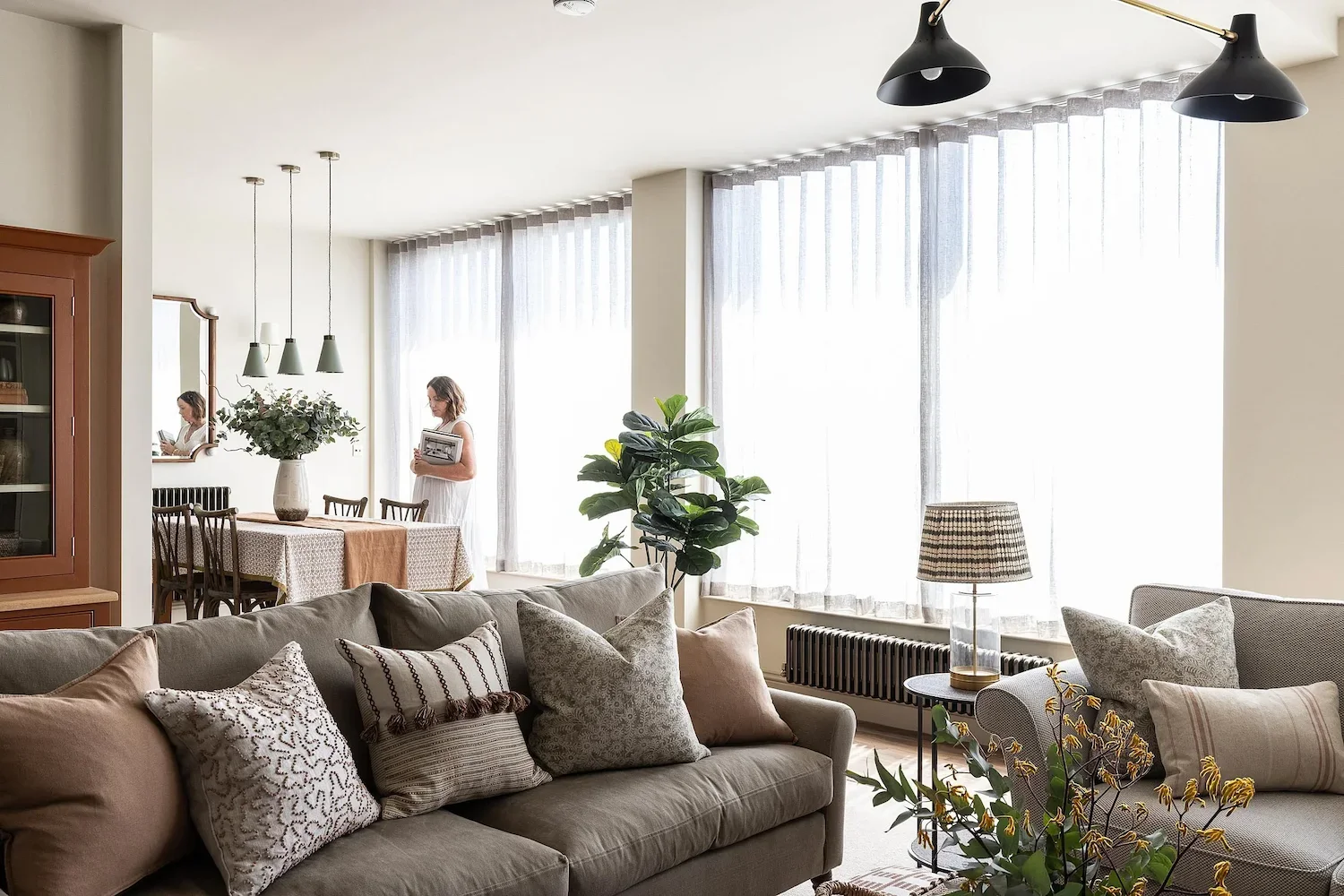
Ann styling a living room
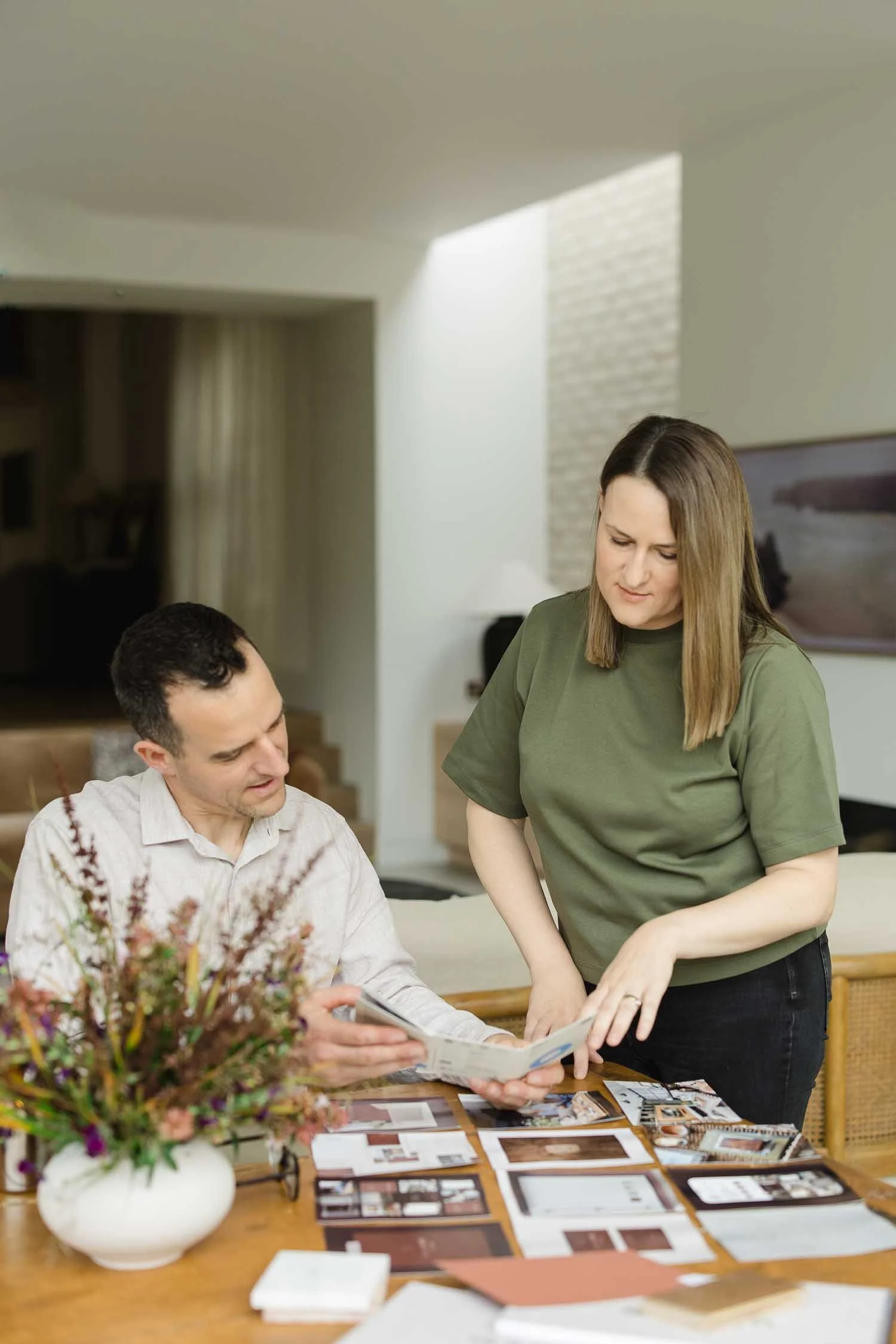
We met Ann properly before a single brief was written: we spent a day together at The Newt in Somerset, getting to know her interior design business; the clients she loved working with and the ones she wanted to attract; the projects she was proudest of; and the direction in which she wanted to head.
Brand strategy
Our brand strategy process came first, so before Rachael touched a single visual, we worked through brand purpose, vision, mission and values, tone of voice and target audience. We developed detailed client profiles, mapped out Ann’s competitive landscape and identified exactly where Middlethorpe Interiors should sit: luxury and traditional in feel, but not casual, not derivative. An interior design studio with "broad shoulders and the ability to tackle any project well." One that inspires the reaction, "where have you been hiding?"
Ann's feedback sharpened the work as it developed. She wanted the tone to carry authority without sounding pompous; approachable expertise; an interior design studio that plans rather than reacts.
Visual identity
With the strategy in place, Rachael built the visual identity. The colour palette took its cues from Yorkshire itself: Shambles Black, Abbey Brown, Howard Green, Haworth Heather, Minster Stone, Whitby Mist. Deep, warm, rooted. The typography created key pairings for headings, subheadings and body copy, blending serif warmth with clean sans-serif confidence. The logo centred on a distinctive monogram mark, with a full suite of primary, secondary, tertiary, submark and alternative logo variations to ensure the brand worked everywhere from a website header to a foil-blocked business card.
Illustrations
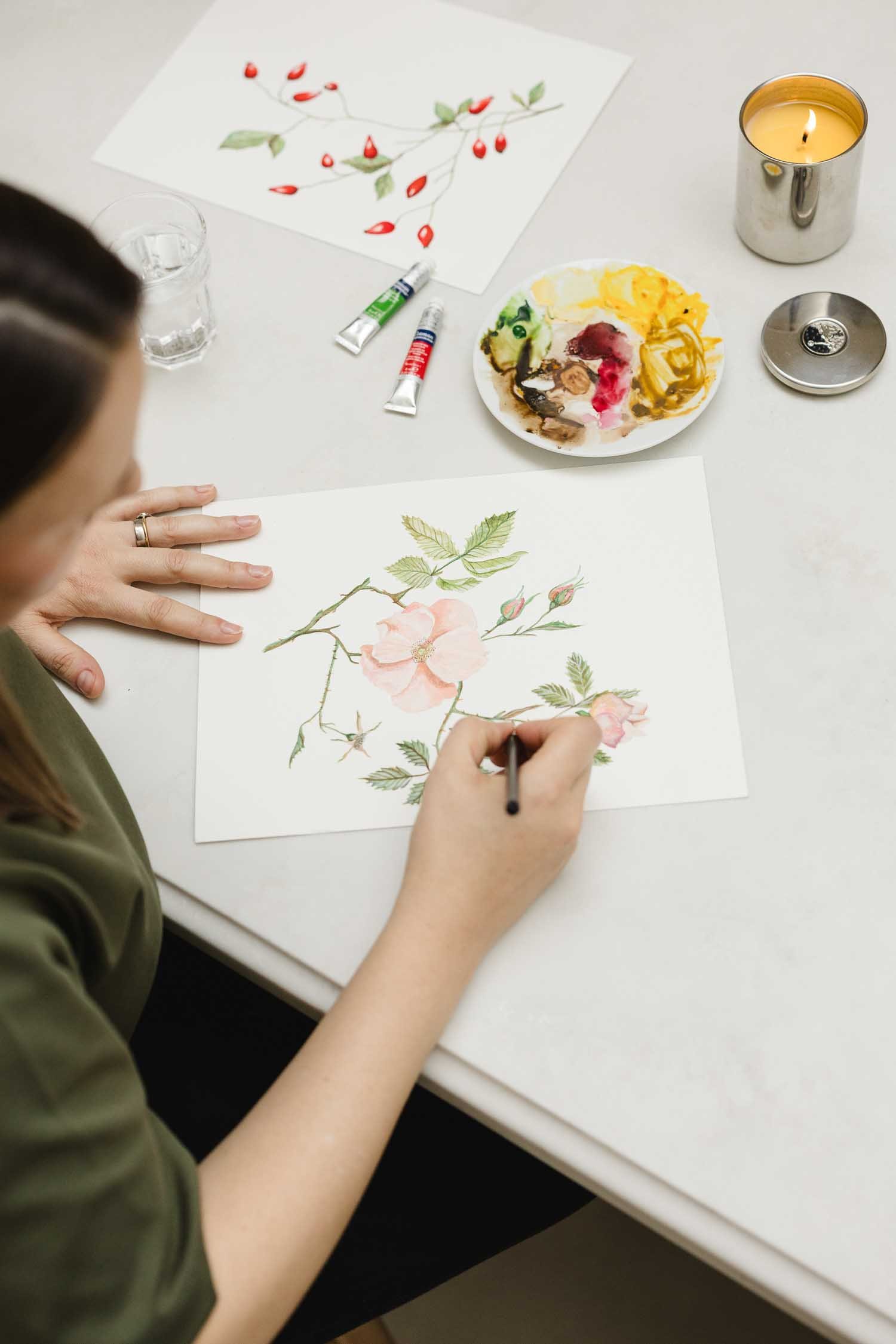
We also thought well beyond just digital out-workings - custom Yorkshire-themed architectural illustrations. A pattern built from the brand mark. A signature scent range concept drawing on York's historic landmarks. Swatch tops, swing tags, furniture marks, candle labels, tissue paper. The identity was designed to live in the physical world of a luxury interior design practice, not just on Instagram.
Website
Alongside the identity, our copywriter Hilary worked closely with Ann to build the website copy, covering the core service pages and drawing out the voice we'd established in the brand strategy. The result was a website that's clear, elegant and built to work hard for the business. You can see the full identity, including the physical applications, in the Middlethorpe portfolio.
The takeaway: Visual identity should never be the starting point of a rebrand; it should be the output of strategy work that's already settled who the brand is for and why.
Calm, curated, comfortable: the brand identity in full
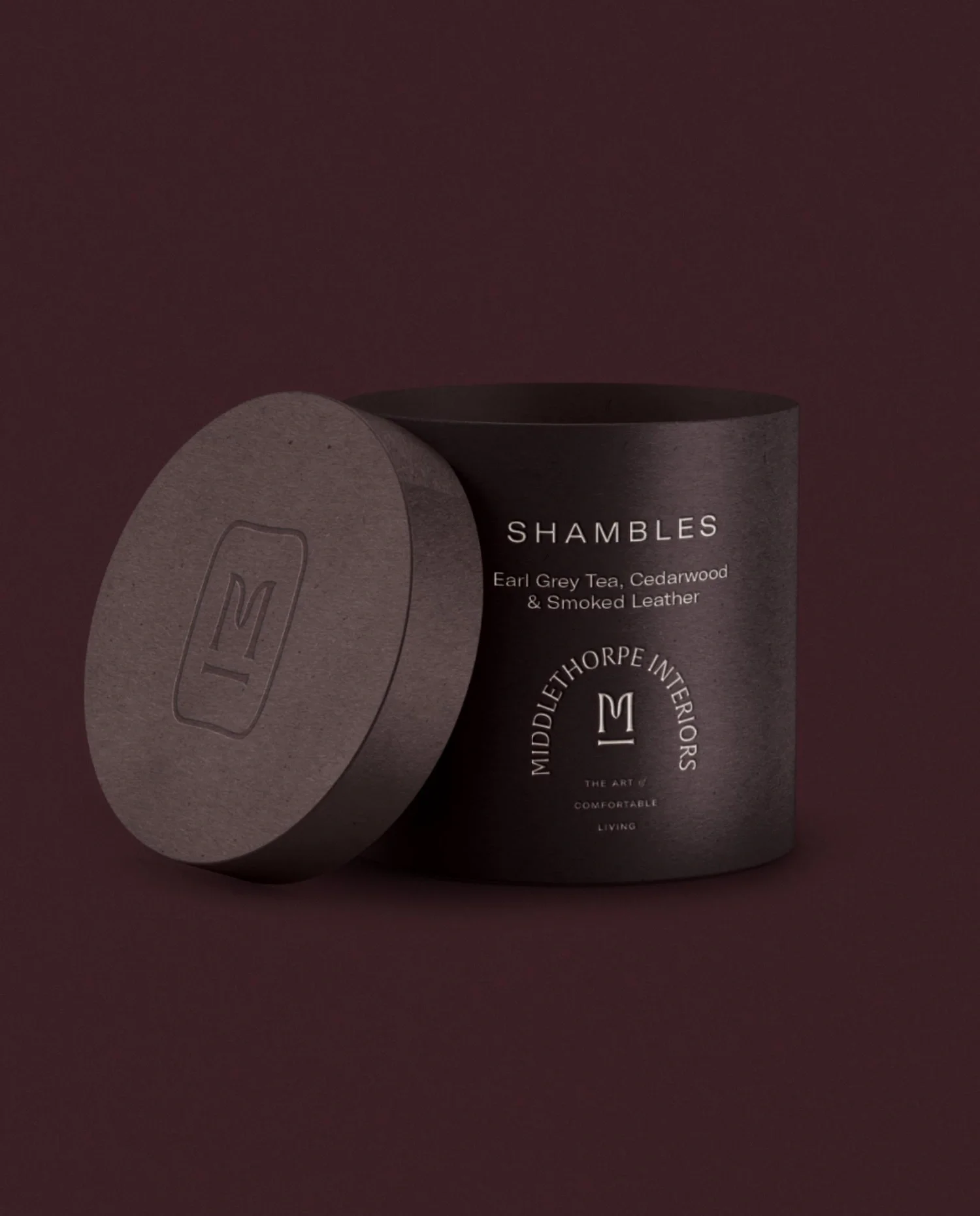
Custom round candle box packaging
The primary logo, shown on Shambles Black. Foil-blocked on postcards and business cards, the mark sits somewhere between a hotelier's crest and an architect's stamp. Confident without being loud.
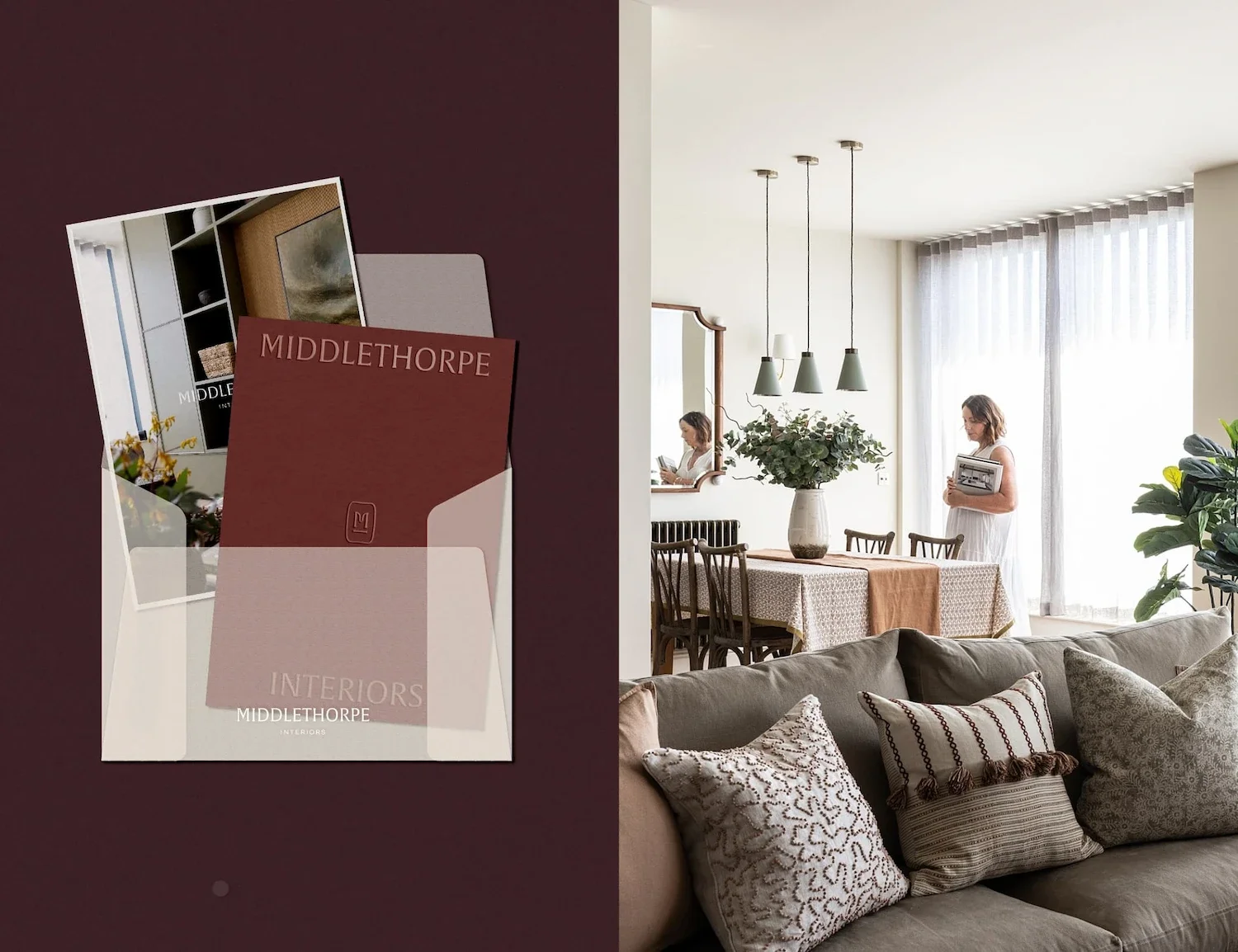
Print stationery alongside brand photography
The Yorkshire-derived colour palette. Cool and muted in summer, with an autumnal warmth that sets Middlethorpe apart from the greige-and-beige competitors in the market.
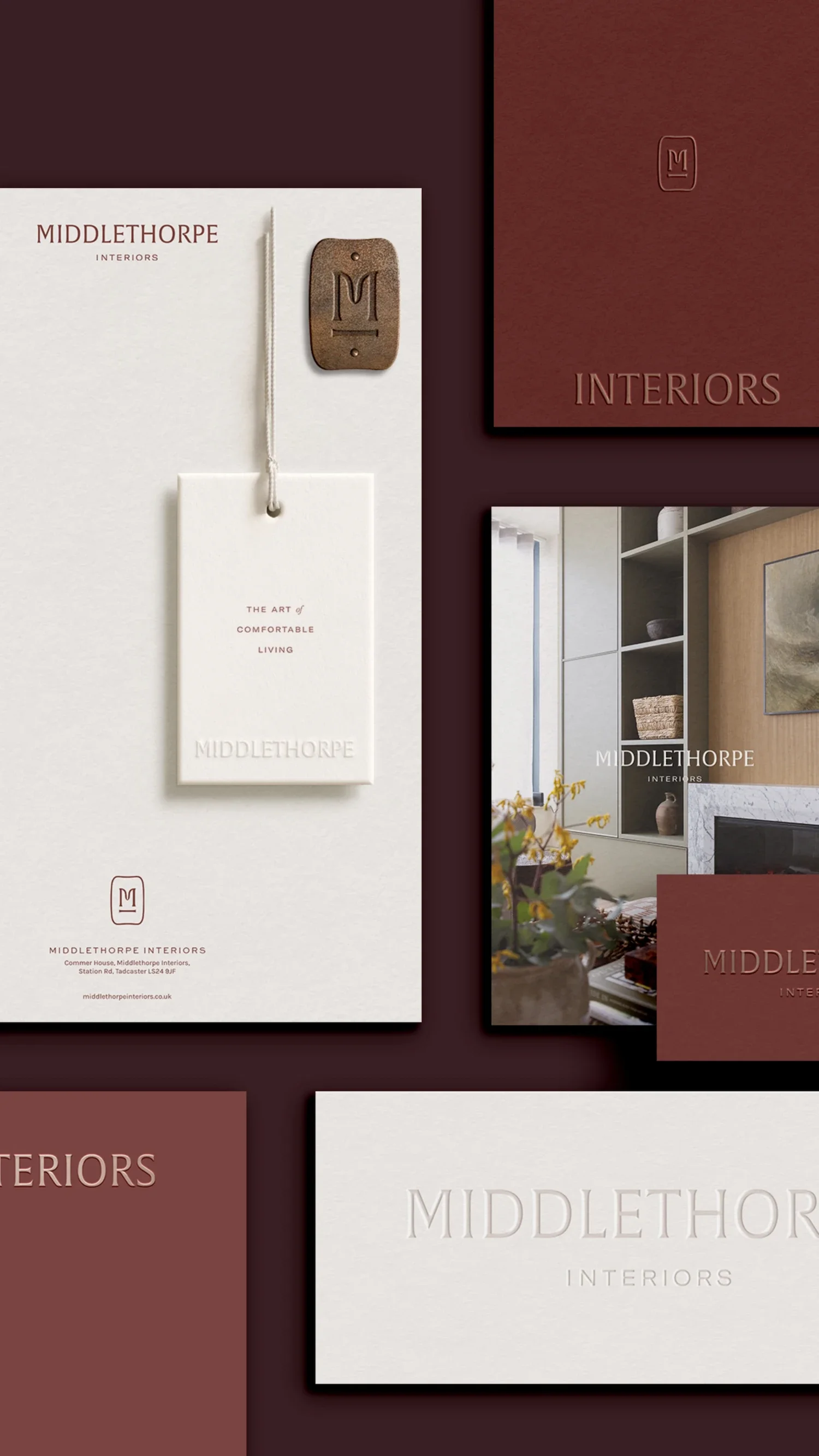
Brand stationery flatlay
Applications developed for print. 540gsm postcards in Colorplan Mist with Cocoa Brown foiling; square business cards with a soft-touch velvety finish. The physical touchpoints for a studio that delivers a concierge-quality experience.
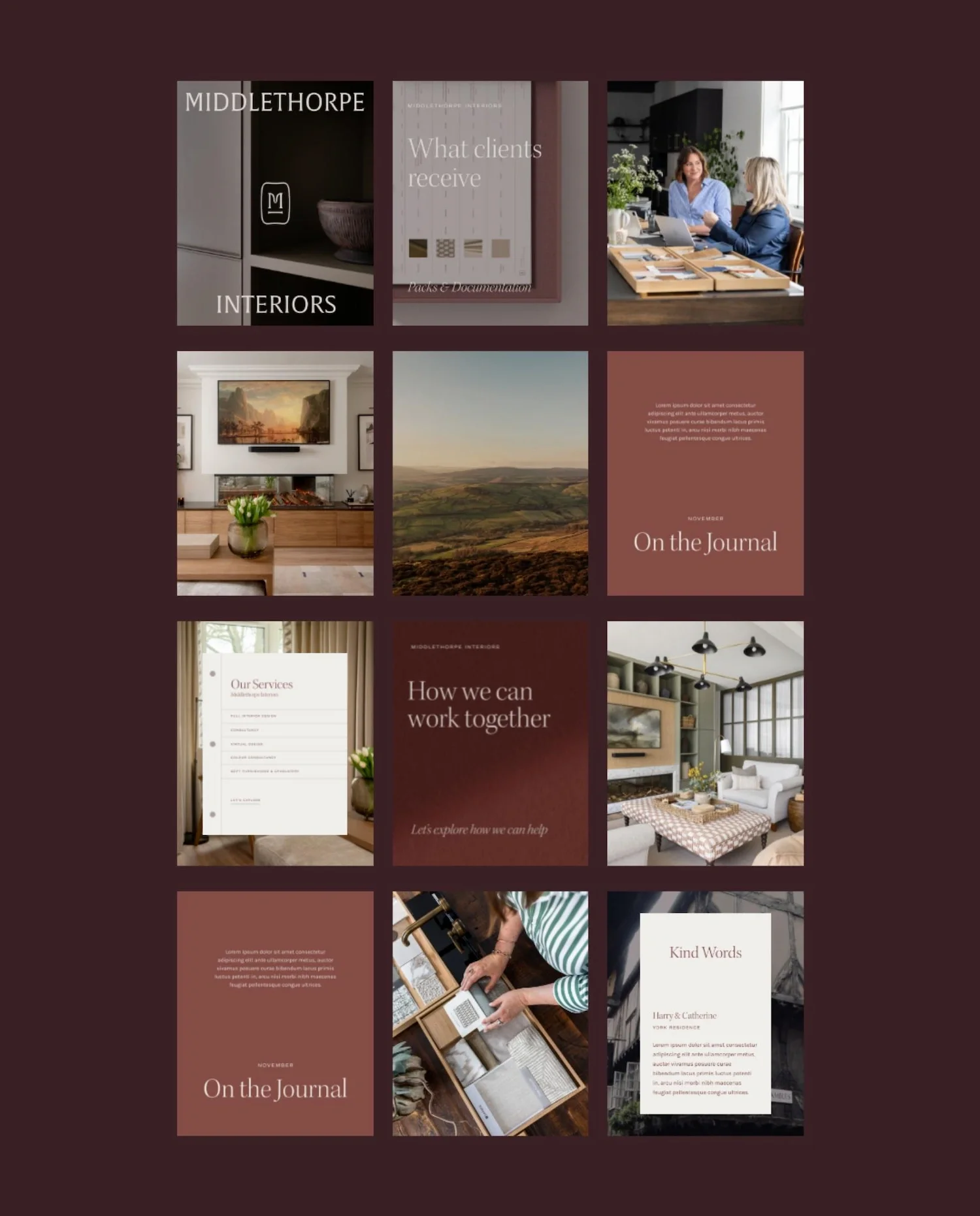
Instagram social media templates
Social media templates designed to be simple, spacious and on-brand. Plenty of white space, type-led layouts, and the option to overlay on photography in Canva.
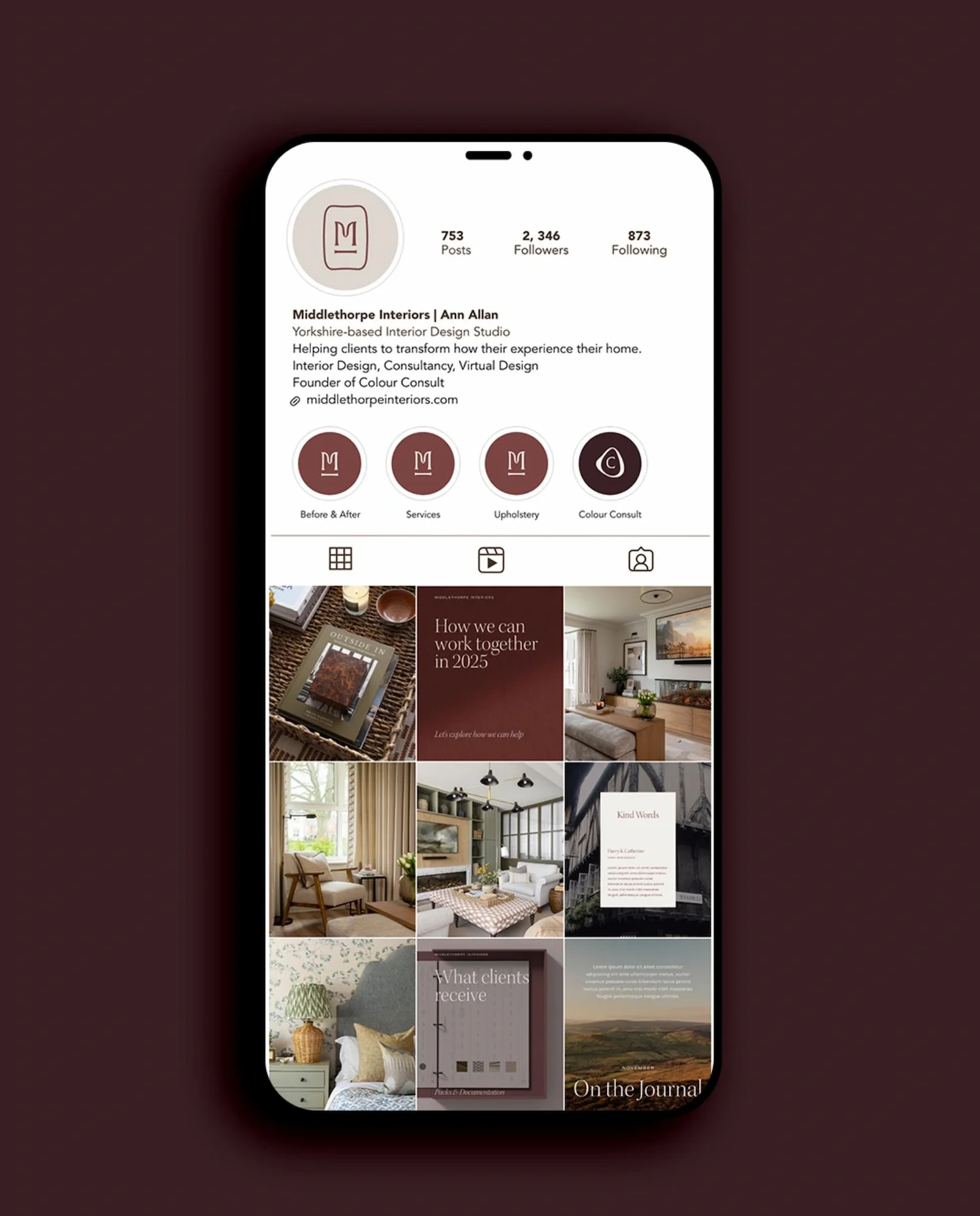
Curated Instagram feed and profile
The Instagram profile direction: photography-forward, warm and still, with a grid that feels curated rather than busy.
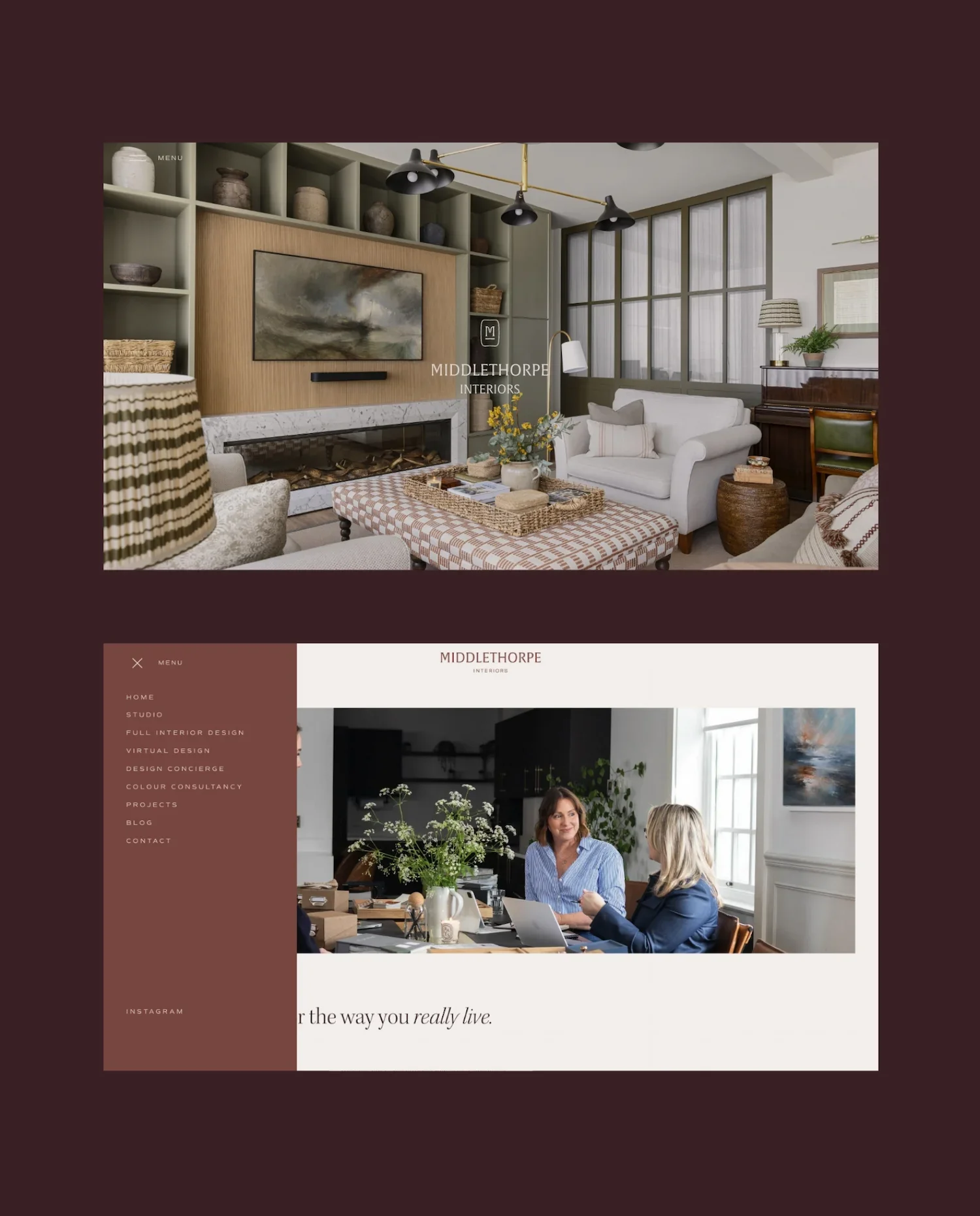
Desktop web design mockuo
The live website. Clean, elegant and firmly positioned in the luxury space.
The takeaway: A luxury brand identity earns trust by being specific to a place and a practice, not by following the generic conventions of "luxury" as a category.
A website that does justice to the work
The website launched in August 2025, almost exactly a year after Ann first began working with us.
In the 16 months since launch, the site has recorded over a significant volume of impressions in Google search, with the homepage now appearing very prominently for key commercial search queries and high-intent local searches. Daily search impressions have grown by more than 60% over the period - search visibility is building steadily for Ann’s interior design business.
More important than numbers is what Ann said when it was done.
"It's almost a year to the day since we first began this journey together, and I couldn't be more delighted with the results. The result is a website that is clear, elegant and will work hard for my business."
She was generous about both sides of the collaboration:
"Rachael, your design eye is outstanding. You took my brief and ran with it, creating something that feels both true to Middlethorpe and elevated beyond what I could have imagined. Simon, the structure you brought, along with your technical expertise and calm guidance ensured the whole process always felt seamless and moved forward."
And on her Google review:
"A year later, we are so proud of our work together. Their way of working is creative whilst keeping things on track and they have great vision. I would wholeheartedly recommend Wildings to anyone who feels like their branding no longer reflects their work, values and vision for the future."
She also reflected honestly on the timeline:
"It's not easy spinning the plates and I really appreciate your endless patience throughout, guiding me gently while allowing me the space to refine until it felt just right."
That's the kind of project we love. Not a fast turnaround for the sake of it, but a considered one. Work that took the time it needed to be right.
The takeaway: A rebrand done properly shows up in measurable search performance, not just in how a business feels about its own website.
Project scope and deliverables
This project fell under our brand identity and consultancy offering and covered:
Brand strategy and messaging document (vision, mission, purpose, values, target audience, brand goals, competitive analysis, tone of voice, commercial positioning, brand proposition)
Full visual identity: primary, secondary and tertiary logos, submark, alternative marks, colour palette, typography system, photography direction, brand pattern, custom illustrations
Brand guidelines document
Physical application design: business cards, postcards, letterhead, envelopes, swatch tops, swing tags, furniture marks, candle labels, tissue paper, retractable banner, stickers
Website copywriting across core pages
Website design and build
Handover video call covering setup and future editing
Timeline: August 2024 (kick-off) to August 2025 (launch)
To find out more about how we work, visit our branding page or our consultancy page.
Ready to close the gap between your brand and your business?
If your studio has moved on but your branding hasn't, we'd love to hear about your project. Get in touch and we'll help you work out what's actually needed.
Frequently Asked Questions
-
Because success often outpaces branding, not the other way round. Middlethorpe Interiors had award-winning projects, a growing team and a client base expanding into second homes, but the brand and website hadn't moved with it. When a business and its branding fall out of step like this, the brand becomes the weakest part of the offer rather than the strongest.
-
For Middlethorpe Interiors, the process ran for a year, from August 2024 to launch in August 2025. That included strategy work, a complete visual identity, physical applications and a full website rebuild with new copy. It's worth saying plainly: that timeline isn't a delay, it's what a considered rebrand actually takes when strategy comes first.
-
Strategy, every time. Before any design work began on Middlethorpe's new identity, the brand purpose, values, tone of voice and target client profiles were defined in full. We've written about the brand strategy process in more detail if you want to go further. Skipping that step is how studios end up with a logo they like but a brand that still doesn't say anything specific about who they are.
Further reading
These sources give context to this project and are worth browsing if you're considering a rebrand for your own interior design business.
British Institute of Interior Design – the UK's only government-recognised professional institute for interior designers, and the accrediting body referenced for Ann Allan's BIID-registered status
The Impact of Brand Consistency, Demand Metric and Lucidpress – the original benchmark research behind the widely cited finding that consistent branding can lift revenue by up to 23 to 33%, relevant context for why Middlethorpe's rebrand was a commercial decision and not just a visual one
British Academy of Interior Design – useful background on accreditation standards across the UK interior design industry, for readers wanting to understand the credentials landscape Ann operates within
About the author:
Simon Cox is co-founding director of Wildings Studio alongside his wife and creative director Rachael Cox. He leads brand strategy, web design and content at Wildings, and writes regularly on branding, SEO and what it actually takes to build a business presence worth noticing. The Middlethorpe Interiors project is a good example of the kind of work he and Rachael do together.


In this article:
Key takeaways on rebranding for interior designers
Free download: The brand outgrowth worksheet
Meet Ann Allan, Yorkshire's best-kept interior design secret
The website was holding the business back
Brand strategy before brand identity, always
Calm, curated, comfortable: the brand identity in full
A website that does justice to the work
Project scope and deliverables
Ready to close the gap between your brand and your business?
About Wildings Studio
Wildings Studio is a branding and website design studio based in South Devon. We work with design-led businesses, including interior designers, architects, garden designers and boutique hospitality brands, helping them build brands and websites that reflect where their business actually is, not where it started. If your brand has outgrown itself, our branding work and website design pages are a good place to start.