Most garden designers don't need more website traffic; they need more of the right enquiries. If your website is attracting people looking for ideas rather than people ready to invest in garden design projects, the issue is usually not visibility, but relevance.
The most effective local SEO helps search engines understand what you do, where you do it and who your services are designed for. When those signals are aligned, your website becomes easier to find for the people most likely to value your expertise, trust your process and enquire about higher-value projects.

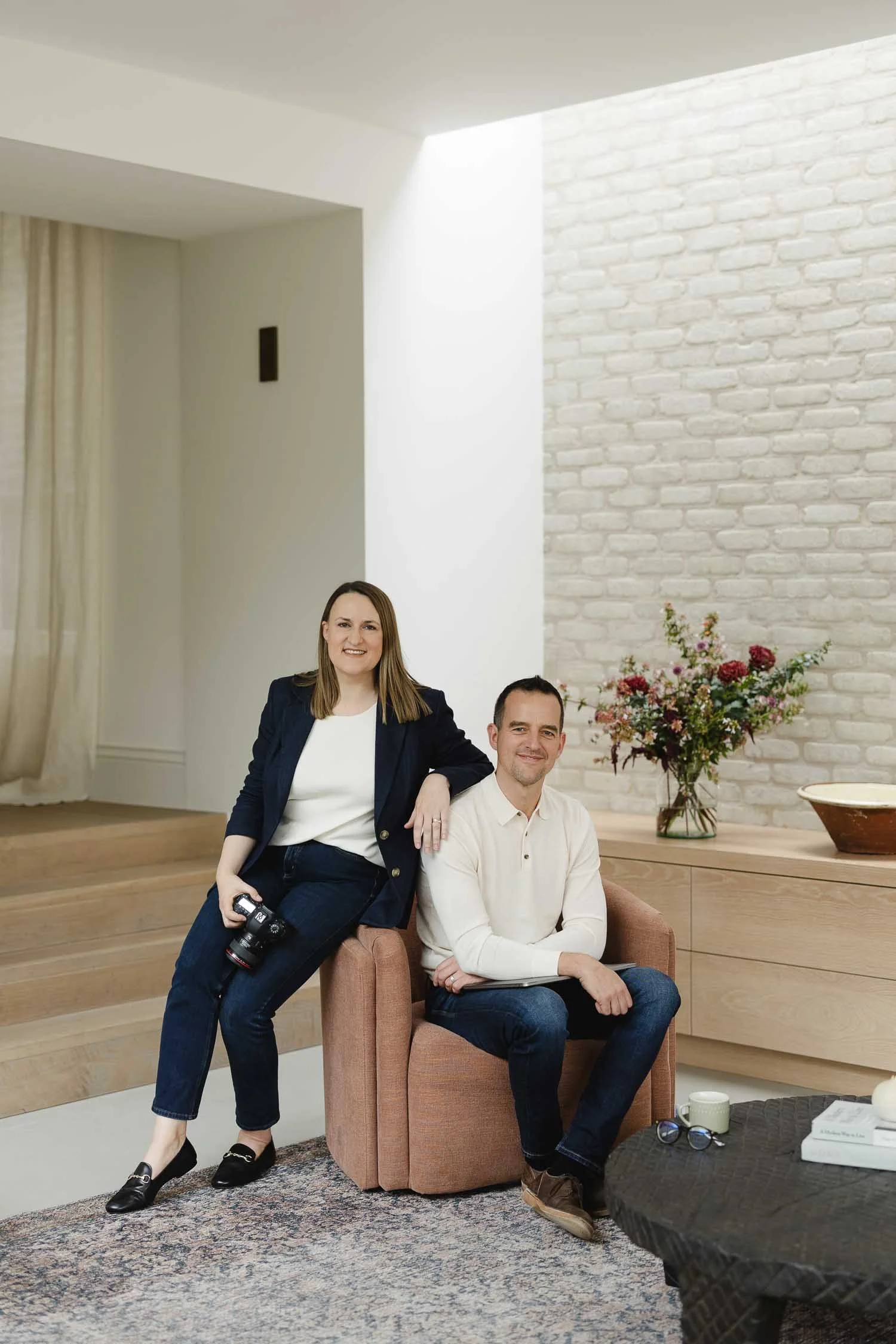
Rachael and Simon pretending to be garden designers, reviewing project plans and website strategies for attracting higher value local clients
Why most garden designer websites attract the wrong kind of enquiry
One the main problems garden designers struggle with on their websites is attracting the wrong kind of enquiries (closely followed by not generating enough enquiries).
There are a few reasons for this:
Too many inspiration seekers, not paying clients - your content ranks for general garden inspiration searches instead of more specific, high-intent local project searches (that lead to enquiries)
Service pages are not relevant to local searches - Google cannot confidently match your garden design services to a specific location or the intent of local buyers’ searches
Portfolio imagery dominates without conversion-focussed copywriting - visitors admire your garden design work, but cannot easily understand your value; whether you are a good fit or what the next steps are
This is where local SEO comes in: the practice of answering the questions that your ideal clients put in Google or a search engine in order to appear more prominently in search results. The more prominent you are in search results for the right searches by the right people, the more traffic you drive to your website and more enquiries you generate. The trouble is that there is a lot of confusion and misunderstanding about SEO among garden designers.
Ultimately, the key takeaway is that SEO quality beats SEO volume. Just as going viral on social media doesn’t always generate outcomes, attracting the right kind of visitors through SEO is better than sheer numbers of people landing on your site.
In this article we’re going to look at how you can address these issues on your website as a garden designer.
Branding and websites for garden designers that attract higher-value enquiries →
What "local" actually means in garden design SEO - and why it works in your favour
It’s easy to get disillusioned or put off by local SEO when it comes to garden design, especially with all the spam calls and e-mails promising magical ‘Page 1 of Google’, often within impossible timescales. However, local SEO can be transformative for your garden design business, particularly if you lean into the ‘local’ element. Rather than constraining you, local SEO gives you a competitive advantage, working in your favour for the following reasons:
Local SEO helps you be more relevant to demand for local services - Google matches your services to customers’ geographic demand (known as ‘intent’) rather than broad generic gardening searches
Local search prioritises nearby clients who are most intent on purchasing - local SEO helps filters out those who are unlikely to purchase (just looking or browsing) and connects you with homeowners who are ready to buy garden design
Local authority builds trust within specific geographical areas - consistently underlining your business location and services sphere of influence strengthens your reputation and increases your visibility for those searching for premium garden design services in your region
Too many garden designers (plus others, to be fair) fall into the trap of thinking that they should serve a wide area and work with as many people as possible. The theory is that ‘more is better’, but this is a fallacy. Being more tightly focussed on a particular demographic and geography with your garden design work actually drives increased revenue.
The 80:20 rule definitely applies here: 20% of your garden design clients are likely to drive 80% of your business revenue, so why not focus on the 20% of customers you’d most like to work with? Local SEO helps you achieve this laser focus on those 20%, helping you target the right garden design clients, in the right area, at the right time, with the right message that makes you and your business happier and more effective.
Is your Google Business Profile doing the qualifying work it should?
Google Business Profile comes into play, not because it is a primary ranking tool; instead its real value is that it acts to pre-qualify visitors. This makes it a vital tool along side your local SEO as a garden designer. The best garden design Google Business profiles help potential clients decide whether you're the right designer before they click through to your website or make an enquiry. Once you get your local SEO going as a a garden designer, a well set up Google Business Profile helps filter that traffic for quality - a bit like a quality control step. A good Profile if you want to not only maximise your traffic but then drive the right enquiries at the end of the process.
Your profile helps you in the following ways:
Ensures enquiries come from your preferred locations - a well-optimised Profile attracts nearby clients rather than enquiries from areas that won’t work for you (particularly if you don’t want to travel)
Your leads already understand your overall services - a strong Profile communicates your expertise, value and positioning before the first conversation, making your sales process more efficient
Your Profile attracts projects not just questions - having the right categories, photos and services in your Profile help filter out poor fit enquiries
Key Google Business Profile elements that qualify better enquiries
Choose the most accurate primary category
Your primary category sends one of the strongest ‘relevance signals’ to Google (i.e., that your website is most relevant to a particular search). Select the category that best reflects your core service rather than the broadest option available.
Add relevant secondary categories
Use secondary categories to support related services such as landscape designer, landscape architect or garden centre where genuinely applicable. Avoid adding categories simply because they might increase visibility.
Define your service areas clearly
List the towns cities and regions where you actively take on projects. This helps Google connect your business with location-specific searches.
Complete your services section properly
Add individual services such as garden design, planting design, master planning, landscape design, front garden design and family garden design. Include concise descriptions where possible.
Use project-led photography rather than generic images
Show completed gardens, before and after transformations, planting schemes, outdoor entertaining spaces and details that reflect the type of projects you want more of.
Write a positioning-focused business description
Explain who you work with, the type of projects you specialise in and the locations you serve. Focus on differentiation rather than keywords alone.
Collect reviews that mention project types and locations
Reviews that reference specific services, outcomes and places help reinforce relevance and trust. Ensure to follow Google’s best practices for collecting reviews - public trust is essential.
Keep contact information consistent everywhere
Your business name, phone number and website details should match your website and directory listings. This is key - inconsistencies can lead to delays launching your Profile or it getting flagged for spam.
Link to the most relevant page on your website
For many garden designers this may be a location-specific service page rather than the homepage.
Regularly add updates and new project imagery
Fresh content signals an active business and gives prospective clients more confidence in your expertise.
Overall, good local SEO will help attract the right client and get traffic flowing to your website as a garden designer. However, your Google Business Profile provides that extra quality filter so that you end up talking with the clients on calls who are most aligned with your services and budget expectations.
Why a single "services" page is costing you clients who search with intent
People searching for garden design services do so in different ways and with different intentions. Some searches are more for information, such as ‘what’s the best layout for a small courtyard garden?’. This tends to be the case where homeowners are beginning to explore the challenges with their gardens. Conversely, other searches are highly focussed on finding and booking a garden designer, such as ‘garden designer near me’. In this case, a homeowner is keen to make a purchase.
This sliding scale of queries is known as ‘search intent’ and it matters for your local SEO as a garden designer and how you apply it to your website. It also matters when a potential garden design client simply searches for ‘garden design services’. Google and search engines still apply the principle of search intent in this case. It’s safe to assume that a visitor is looking for garden designers that, ideally, are close to them. Plus, it make sense for the business, as most designers don’t want to be travelling up and down the country, but focus on their immediate geography.
Consequently, one service page on your website can’t serve the two example search intentions above simultaneously. Each search intent requires a different approach and different content to make it as effective as possible, even though they fall under the same garden design umbrella. This is why location pages make sense for a garden designer offering services in a number of key areas.
Here are the key reasons why a single service page may be costing you clients who are using searches intentionally:
One service page cannot match every search intent - specific searches need specific answers and Google rewards pages that deliver them
Broad service pages dilute how relevant you are to searches - location specific pages give search engines stronger evidence of where you work
High intent visitors want immediate reassurance - dedicated pages help prospects quickly confirm expertise fit location and service needs
The way round these issues is location-specific pages. Note that a location page is not a silver bullet and should not be utilised in the absence of high quality content that answers searchers questions. However, it is an excellent way to target searches with high intent, such as ‘garden design services in [insert location or ‘near me’]’ in conjunction with other content that serves queries with different search intent.
Website design that helps garden designers convert more of the right enquiries →
How to build service pages that pre-sell your value before a client calls
When it comes to building the service pages on your garden design site, it’s important to recognise that they serve as qualification tools first and SEO tools second. Their primary goal is to drive your garden design enquiries, rather than necessarily rank for ‘garden designer Bath’ or ‘garden design Bristol (that’s where location pages come in, as above). Your service pages as a garden designer should help your ideal clients think, ‘this designer understands exactly what I need, works in my area and is likely within my budget’.
The key things to remember when building service pages (that ideally do a lot of the selling and underlining your value before a client calls) are:
Show outcomes not just lists of services - clients buy transformations and expertise not generic descriptions of what you offer
Use local proof to build immediate trust - relevant projects and locations reassure visitors that you understand their context
Set expectations of your value before enquiries ever arrive - clear positioning helps attract clients with suitable budgets and discourage projects that are not a good fit
Lead with the specific garden design service and location
The page title and heading should clearly state both the service and location. Examples:
Garden design in Bath
Planting design in Bristol
Family garden design in Surrey
This immediately aligns with search intent and reassures visitors they're in the right place.
Explain who the service is for
Describe the type of client, property and project. For example:
Period townhouses
Contemporary new-build homes
Large rural gardens
Family gardens
Courtyard gardens
This helps visitors self-qualify before they enquire.
Show relevant local project examples
Include projects from the location or surrounding area whenever possible. Focus on:
Before and after transformations
Design challenges
Results achieved
Project photography
This provides both trust and local relevance signals.
Include location-specific context
Demonstrate genuine knowledge of the area. Examples:
Local architectural styles
Typical plot sizes
Coastal gardens
Exposed sites
Urban courtyards
Conservation areas
Google sees local relevance while visitors see expertise.
Explain your process
Most garden design websites jump straight into portfolio imagery. Instead, explain:
Initial consultation
Concept design
Detailed design
Planting plans
Project implementation
Process reduces uncertainty and increases trust.
Add project value anchors
You don't necessarily need to publish prices; instead, give visitors clues about project scale. Examples:
Typically suited to full garden transformations
Often commissioned alongside home renovation projects
Best suited to clients seeking a complete redesign
Frequently delivered as six-figure landscaping projects
This helps filter enquiries before they arrive.
Include social proof relevant to the service
Avoid generic testimonials. Use reviews that mention:
The service
The location
The outcome
Specific proof is more persuasive than general praise.
Answer common pre-enquiry questions
Include a short FAQ covering:
The areas you serve
Project timelines
Budget expectations
Planning considerations
Collaboration with landscapers
This captures additional search intent and removes friction.
Link to related service and location pages
For example:
Garden design in Bath
Planting design in Bath
Garden design in Bristol
Landscape design services
This strengthens topical authority and helps Google understand site structure.
Finish with a strong qualification CTA
Avoid:
Get in touch
Instead use:
Planning a garden redesign in Bath?
If you're looking for a thoughtful, design-led approach to transforming your outdoor space, we'd love to hear about your project.
The best service pages don't simply describe what you do; they demonstrate who you work with, where you work, the value you create and the type of project you're best suited to. When done well, they pre-sell your expertise long before the first phone call.
Branding and website design studio in Devon working with design-conscious businesses →
Which local SEO signals actually move the needle for landscape architects?
Many local SEO activities can become ‘busy work’ with marginal impact if you’re a landscape architect, so it’s important to play SEO to its strengths, focussing on how it can produce results. This increases the efficiency of it as a marketing activity and creates a compounding affect, reducing your overall efforts in future. In term of an ‘SEO signal’, this simply refers to a particular data point or metric that search engines use to evaluate the quality, relevance and authority of a web page. Here are the local SEO signals that make the biggest difference for landscape architects:
Consistent business information builds local search confidence - matching your business details across platforms helps search engines trust the location data about your business
Reviews reinforce expertise relevance and local authority - specific reviews from clients strengthen your credibility and generate better visibility for you in the most valuable local searches
Schema helps search engines understand your business - structured data clarifies your service locations and specific expertise, improving your visibility in local searches
Overall, the signals that consistently influence visibility and trust are the ones that reinforce relevance, prominence and credibility and we break these down further below into the local SEO signals that matter most for landscape architects:
NAP consistency across the web
NAP stands for Name, Address and Phone number. Ensure these details are identical on your website, Google Business Profile and key directories. Inconsistencies create uncertainty for search engines and can lead to your profile being flagged for spam or taking longer to be authenticated.
Google Business Profile completeness
A fully completed Profile with accurate categories, services, service areas, descriptions and photography sends strong local relevance signals.
High-quality reviews
The quantity of reviews matters less than their quality and specificity. Reviews that mention locations, project types and outcomes provide stronger signals.
Local citations
Citations are mentions of your business on directories, industry organisations and local business listings. Focus on quality rather than volume. Examples include:
Professional associations
Local chambers of commerce
Design and architecture directories
Regional business directories
Location-specific service pages
Dedicated pages for key locations often have more impact than acquiring additional directory listings. These pages help match search intent directly.
Local project case studies
Projects tied to real locations strengthen topical relevance and provide valuable supporting content for service pages.
Structured data and schema markup
Schema helps search engines understand:
Your business type
Areas served
Contact details
Services offered
Reviews
Website content
It does not directly improve rankings but improves clarity and understanding.
Internal linking structure
Connect service pages, location pages, case studies and blog content logically. This reinforces topical authority and location relevance.
Location signals throughout your website
Include relevant place names naturally within:
Service pages
Case studies
Testimonials
Contact pages
Avoid keyword stuffing.
Evidence of real-world prominence
Search engines increasingly look for signals that demonstrate genuine expertise and reputation. Examples include:
Industry awards
Speaking engagements
Published projects
Press coverage
Professional memberships
For landscape architects, local SEO is rarely won through technical tricks. It is usually won through a combination of clear location signals, strong project evidence (such as your portfolio), consistent business information and visible proof of expertise. The firms that rank well locally tend to make it easy for both search engines and prospective clients to understand exactly what they do, where they work and why they are trusted.
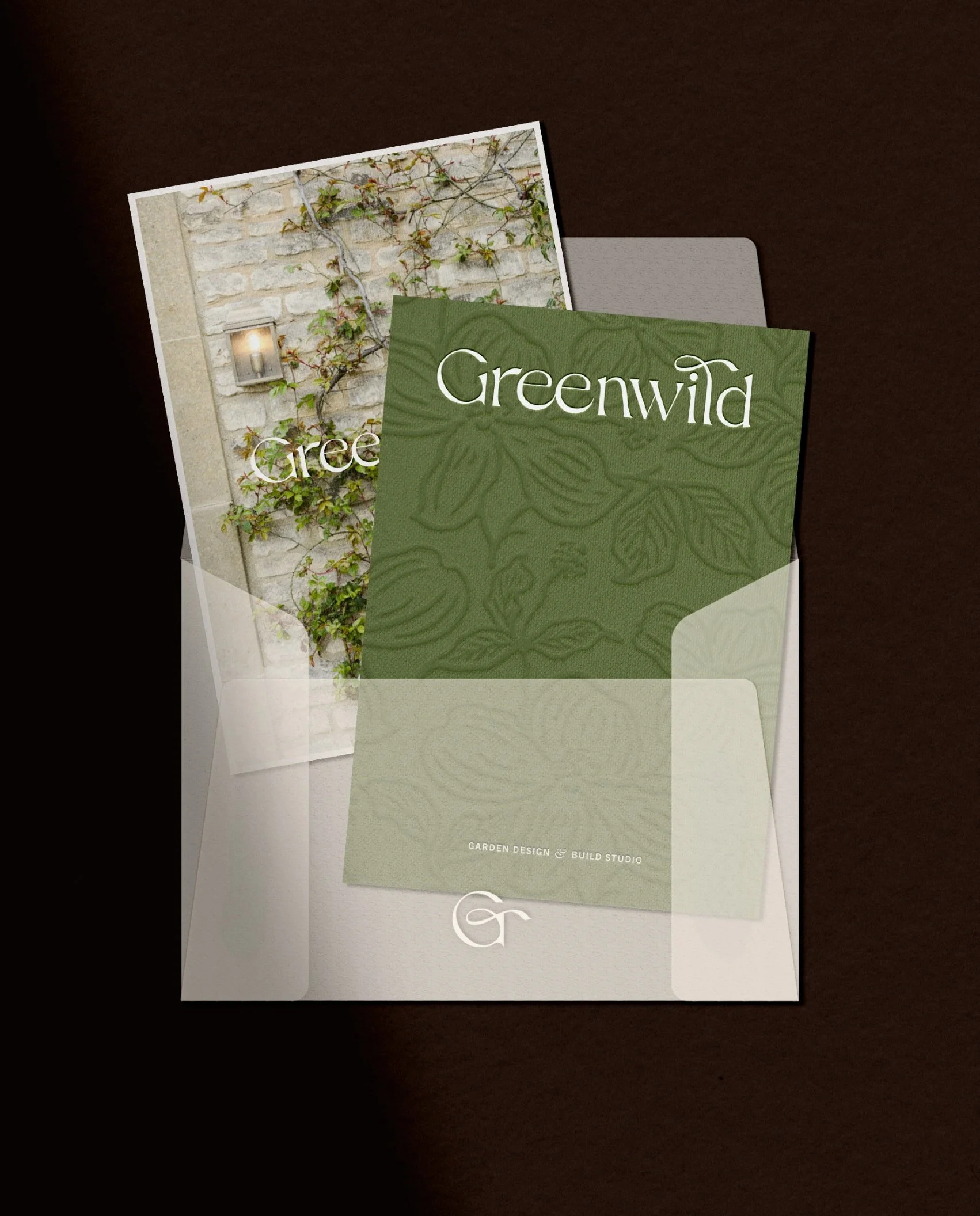
Translucent vellum envelope holding a Greenwild floral brand card and a high-resolution photograph of a lush garden
What this looks like in practice: a garden design studio that improved its positioning with branding-led SEO
A strong example of this in action is our work with Greenwild, a Kent-based garden design and build studio.
Greenwild already produced exceptional, high-end garden projects, but their brand and digital presence didn’t yet reflect the calibre of their work or the type of clients they wanted to attract. The goal was to reposition them as a refined, design-led studio with a natural, elevated aesthetic, and ensure their online presence aligned with higher-value enquiries.
We developed a complete brand identity and art direction system, shaping how the studio presents itself visually and strategically across every touchpoint. This included refining their positioning, visual language, and early digital presence so that the quality of their work was immediately apparent to the right audience.
The result was a more cohesive, premium perception of the studio — helping filter enquiries and attract clients aligned with higher-end garden design projects.
Greenwild brand identity and garden design studio positioning →
The difference between ranking locally and ranking for clients who have the budget
Many garden designers assume local SEO is simply about appearing higher in Google search results. In reality, visibility is only part of the equation. Ranking for local searches is useful, but ranking for the right local searches is what generates better enquiries.
A website can attract thousands of impressions and still fail to generate meaningful opportunities. If your content attracts people looking for ideas, inspiration or low-cost solutions, higher rankings may simply create more of the wrong conversations. Traffic alone is not a reliable measure of success.
The most effective local SEO helps search engines understand three things clearly: what you do, where you do it and who your services are designed for. When those signals are aligned, your website is more likely to appear in front of people actively planning garden design projects rather than casual browsers.
This is why dedicated service pages, location-specific content, project case studies and a well-optimised Google Business Profile matter. Together, they do more than improve rankings: they help communicate expertise, establish trust and set expectations before a prospective client ever makes contact.
The goal is not to become visible to everyone searching for garden design. The goal is to become visible to the people most likely to value your approach, appreciate your expertise and invest in the type of work you want to do more of.
That is the real advantage of local SEO. Done well, it doesn't just increase visibility; it helps your website attract higher-value garden design projects while filtering out enquiries that are unlikely to be the right fit.
If your website is attracting plenty of visitors but not enough of the right enquiries, it may be time to look beyond rankings and focus on whether your branding, website and SEO are working together to qualify potential clients before they get in touch.
FAQ: Local SEO for garden designers
-
Local SEO for garden designers is the process of optimising your website and online presence so you appear in searches from people in your specific geographic area who are actively looking for garden design services. It helps attract higher-quality enquiries by connecting your services to local search intent, rather than general inspiration searches. When done well, it ensures your website is found by homeowners who are ready to invest in a garden design project, not just browse ideas.
-
Most garden designers attract the wrong enquiries because their website content is too broad, too inspirational or not clearly aligned with local search intent. This often means the site ranks for general garden ideas rather than high-intent searches like “garden designer near me” or “garden design in [location]”. Without clear service pages, location signals and conversion-focused messaging, search engines and users struggle to understand who the service is for and where it is offered.
-
Yes, in most cases location pages are essential for effective garden design SEO because they allow you to match specific search intent tied to geography. A single service page cannot effectively rank for both informational searches (e.g. garden ideas) and high-intent local searches (e.g. garden design in Bath). Location pages help Google understand exactly where you work and increase your visibility for clients who are actively looking to hire a garden designer in a specific area.
About the author:
Simon Cox is the co-founding director (along with his wife, Rachael Cox) at Wildings Studio, a branding, website design and content marketing studio in Torquay, UK. He’s the writer and editor of the Wildings Studio blog which you’re currently reading. Simon is also responsible for the Wildings Studio content marketing services. Simon blogs regularly on topics to do with the core Wildings Studio services on branding, website design and content marketing (blogging). He’s passionate about helping small business develop great content that answers the questions people type in Google in order to get found online (SEO).





















In this article:
Why most garden designer websites attract the wrong kind of enquiry
Free download: Land £100k+ garden design clients
What "local" actually means in garden design SEO - and why it works in your favour
Is your Google Business Profile doing the qualifying work it should?
Why a single "services" page is costing you clients who search with intent
How to build service pages that pre-sell your value before a client calls
Which local SEO signals actually move the needle for landscape architects?
The difference between ranking locally and ranking for clients who have the budget
About Wildings Studio
Thoughtful, beautiful branding and websites for design-led businesses
Wildings is a website designer for small businesses offering website design. Based in South Devon, UK, we deliver small business website design for design-conscious brands like garden designers, interior designers, architects, circular ethos restaurants, speciality coffee shops, organic cafés and boutique hotels.