Website design for interior designers: what your portfolio really needs
An interior design portfolio is often the deciding factor in whether a potential client gets in touch or leaves your website. The strongest portfolios do more than showcase beautiful home renovation projects. They tell the story behind each project, make it easy to explore your interior design work and build enough trust for someone to enquire.
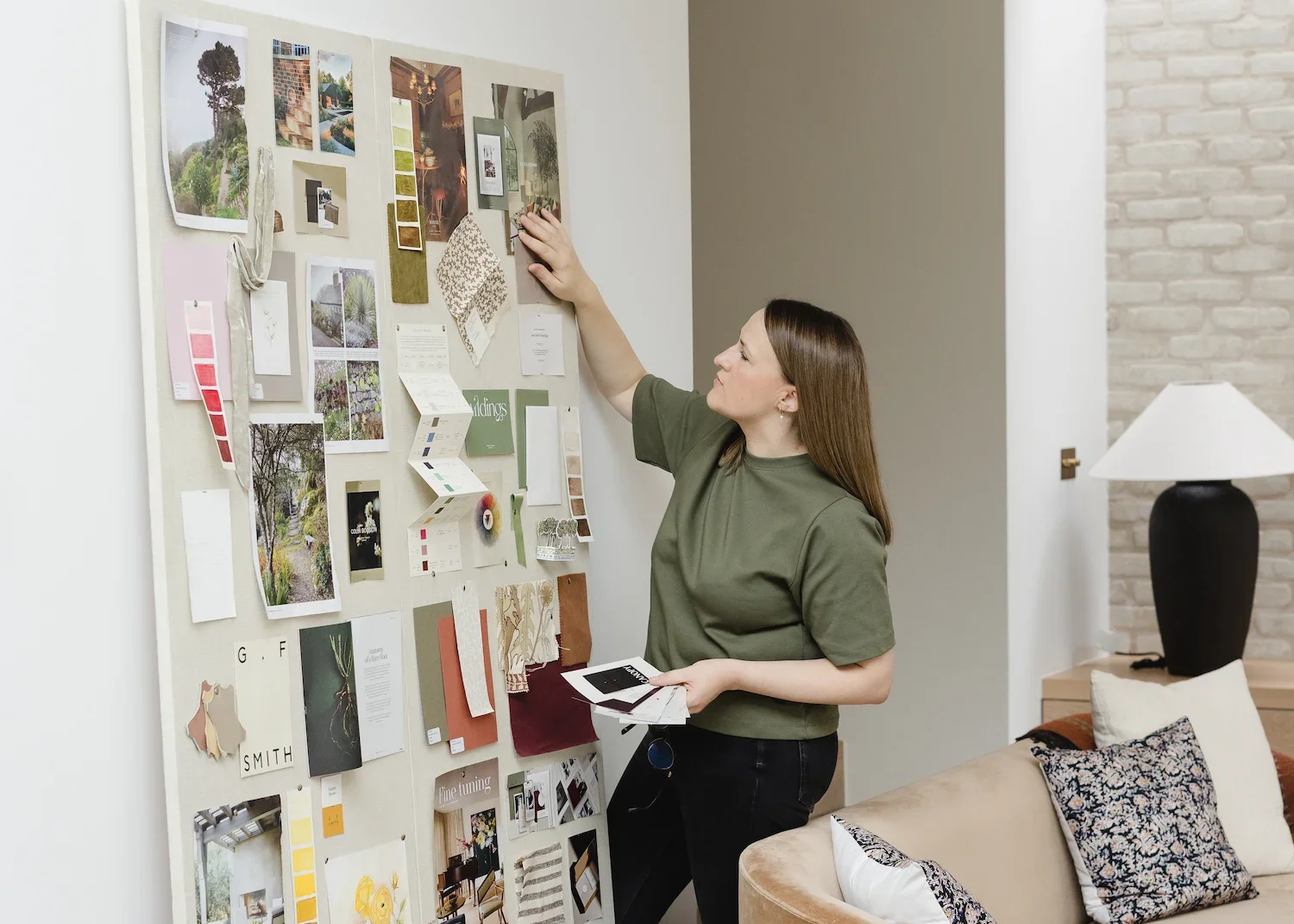
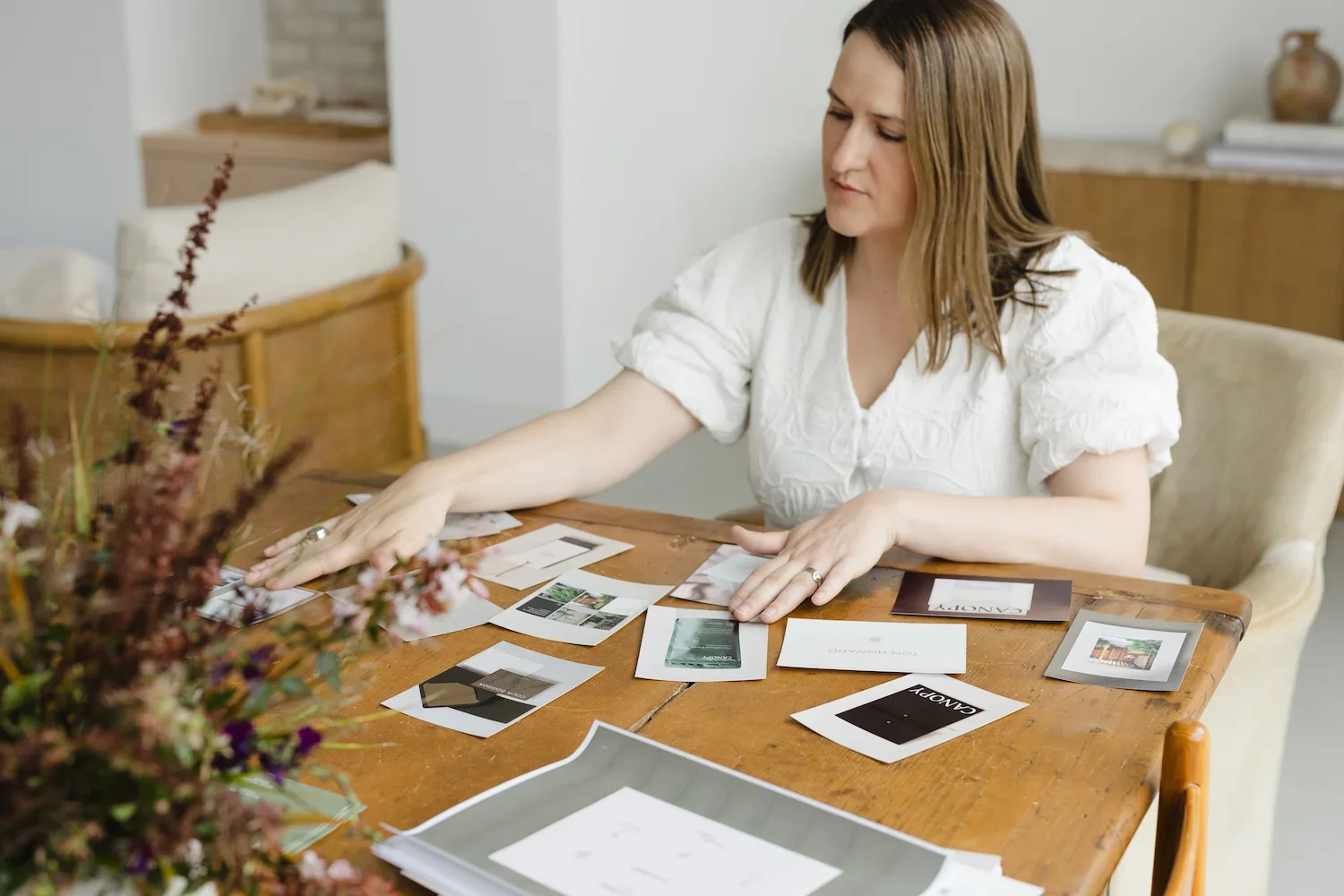
Rachael working on a moodboard
Key takeaways on why your interior design portfolio isn't converting clients
Your interior design portfolio is often more influential than your services page because clients judge your taste and credibility before they read about your process
A portfolio should tell the story of a transformation, not simply present a collection of finished rooms. Context and problem-solving make projects memorable and relatable
Lead with your strongest outcome images. Process photography and behind-the-scenes content should support the story, not be the first thing visitors see
Consistent project layouts make an interior design website feel more professional and easier to navigate. Familiarity reduces friction and keeps the focus on your work
Simple navigation and carefully curated image sequences outperform complex interfaces and oversized galleries. Visitors rarely persevere if they cannot quickly find what they need
Mobile experience matters because many potential clients first discover interior designers on their phones. Slow-loading images and awkward layouts cost enquiries
Not every project belongs in your portfolio. A smaller collection of exceptional projects is usually more persuasive than an extensive archive of mixed-quality work
Every project page should help ideal clients recognise themselves in your work. Alignment drives enquiries far more effectively than trying to appeal to everyone
Calls to action work best immediately after moments of emotional engagement, such as a striking image sequence or the conclusion of a project story
High-converting portfolios remove uncertainty. They answer unspoken questions about your style, process and suitability, making it easier for clients to take the next step and enquire
Why a website portfolio is the most important sales tool for interior designers
Clients judge your work before they read anything else
Most potential interior design clients don’t arrive on your website to read about your process, no matter what you see others doing. You can’t out-process big name interior design studios! A six stage design process don’t sell a dream; it tells a visitor how you work, but crucially not why a client should trust you with their home.
Instead, clients come to your website to evaluate your taste, interior style and whether they trust what you say about your interior design services. Your portfolio is the first and most powerful filter they use to decide whether you feel like a good fit as a designer. If your current site isn't doing that job, it's usually a sign the underlying website design for interior designers in Devon needs rethinking, not just the imagery within it.
This means your project imagery, the way you talk about solving interior challenges and the cohesiveness of your work matter more than long descriptive copy. If your portfolio doesn’t immediately resonate visually, visitors are unlikely to continue exploring your site.
A strong portfolio reduces the need for heavy sales conversations
Let’s be honest, no interior designer ever got into the industry because they want to be a salesperson, pitching and selling. Thankfully, a well-structured interior design portfolio does a significant amount of selling before you ever speak to a client.
Selling is draining, emotional and requires a good deal of resilience when it comes to talking about the key areas of a project. By having a portfolio, you can offload some of that mental and emotional strain to give yourself an easier ride later in the process.
Here are some of the things a portfolio can do:
Communicate your skill level as a designer and how comfortable you are with big, complex or niche projects
Show whether you have a house, signature style (N.B. this is your secret weapon; not a weapon of uniformity but a compelling stand out style)
Signals the scope and breadth of the type of projects you undertake scope without needing explanation
With your portfolio in place, you are more likely to generate warmer enquiries from good-fit clients, because they already understand what you do and whether it aligns with their vision. It also filters out mismatched leads earlier in the process.
In short: A portfolio wins work by proving taste and trust instantly, not by explaining your process
How should interior designers structure project pages for maximum impact?
Each project should tell a clear transformation story, not just show finished rooms
One of the big pitfalls in interior design marketing is to assume that clients are only interested in the finished result and we should avoid the messy middle. While the end does matter, the journey is an incredibly compelling part of the jigsaw, prompting the question, ‘what if they could do the same for me?’.
An interior design portfolio page works best when it guides the viewer through the journey of the project: from context, to challenge, to resolution. This gives meaning to the visuals and positions you as a legitimate interior design problem-solver, not just a stylist (an important distinction).
Without this structure, even beautiful imagery can feel flat or interchangeable. A story-led sequencing in your portfolio helps clients emotionally invest in the outcome of what you do.
The strongest portfolios lead with outcome imagery, not process
In contrast with the overall story sequencing, there is a specific hurdle at the start of your interior design portfolio that is critical: you need to hook visitors immediately and get them to clickthrough to read the project story in full. This is similar to a newsletter subject line - if you don’t capture attention with a strong headline, the rest will fall flat.
The thumbnail or first images on your interior design project page should show the most emotionally compelling final result images. By doing this you anchor visitors’ attention and give a compelling taster, encouraging them to explore more deeply.
It’s still worth including images of the process of the project, but they should support the transformation story rather than lead it. Starting with context or behind-the-scenes shots risks losing users early.
Consistency in project formatting builds perceived professionalism
Consistency in marketing can seem counterintuitive - potentially repetitive and inflexible, like you’re constantly talking to yourself and presenting variations on a theme. However, potential clients take time to absorb a message (hence when it needs to be repeated) plus gravitate towards a clear and compelling style. Too much variety can be confusing and make it harder to choose a designer.
When every project in your interior design portfolio follows a similar structure (intro, overview, imagery flow and key details) your website actually becomes more intentional and high-end. This kind of consistency doesn't happen by accident: it comes from building a consistent brand identity that shapes every page, not just the portfolio section. Inconsistency, by contrast, can make even strong work feel less credible.
What this doesn’t mean is that every client ends up looking the sam, but attractive, desirable design elements are woven in and tailored to each client’s aesthetic. As such, there is no rigid template for the portfolio, but a repeatable rhythm that intuitively makes sense to users and guides them through the story of each interior design project. By introducing this familiarity you actually reduce clients’ cognitive load and help keep their attention on your work itself.
In short: Interior design projects convert best when they show a clear journey from problem to outcome
What makes portfolio UX effective for interior design websites?
UX stands for User Experience. It refers to the overall interaction a visitor has with a website. It dictates how the site works, how easy it is to navigate and how effortlessly users can accomplish their goals: e.g., finding information or making a purchase.
Simple navigation keeps users moving through your work without friction
Interior designers regularly overcomplicate their website portfolio, but simple is actually best, even though it feels counterintuitive. Simplicity in your portfolio UX helps you focus on the needs of your customers: what they want to see and what they want to feel.
If your interior design visitors users struggle to find or browse your portfolio interiors projects, they are less likely to continue exploring; and this is critical, as you want to guide them to get in touch. As a general rule, potential clients don’t persevere or give you the benefit of the doubt when they can’t find things. Clear navigation, project filters and obvious next steps are essential for keeping engagement high on your website.
Interior design websites benefit greatly from minimal distraction: your work should always be the focus, not the friction of the interface. Overcomplicating your UX or content tends to be a sign of insecurity and lack of clarity, which clients will pick up on.
Image flow matters more than image quantity
Imagery is another area that needs careful handling in your website portfolio. While high quality images do matter in interiors, they need to be curated and laid out correctly for the highest impact.
For example, one pitfall can be too many images in a row, which causes the viewer fatigue and reduces impact. A carefully paced sequence, mixing wide shots, detail shots and leaving breathing space in between images, keeps attention longer. It also increases the conversion rate of visitors reaching the final steps of your site, such as the enquiry form on your contact page.
Good UX treats imagery equally alongside the other design elements. In the same way that you tell a story with your text, images should reinforce the narrative rhythm, rather than come across a gallery dump. This approach helps your interior designer visitors absorb the quality of your work rather than browse superficially without appreciating the impact of what you do.
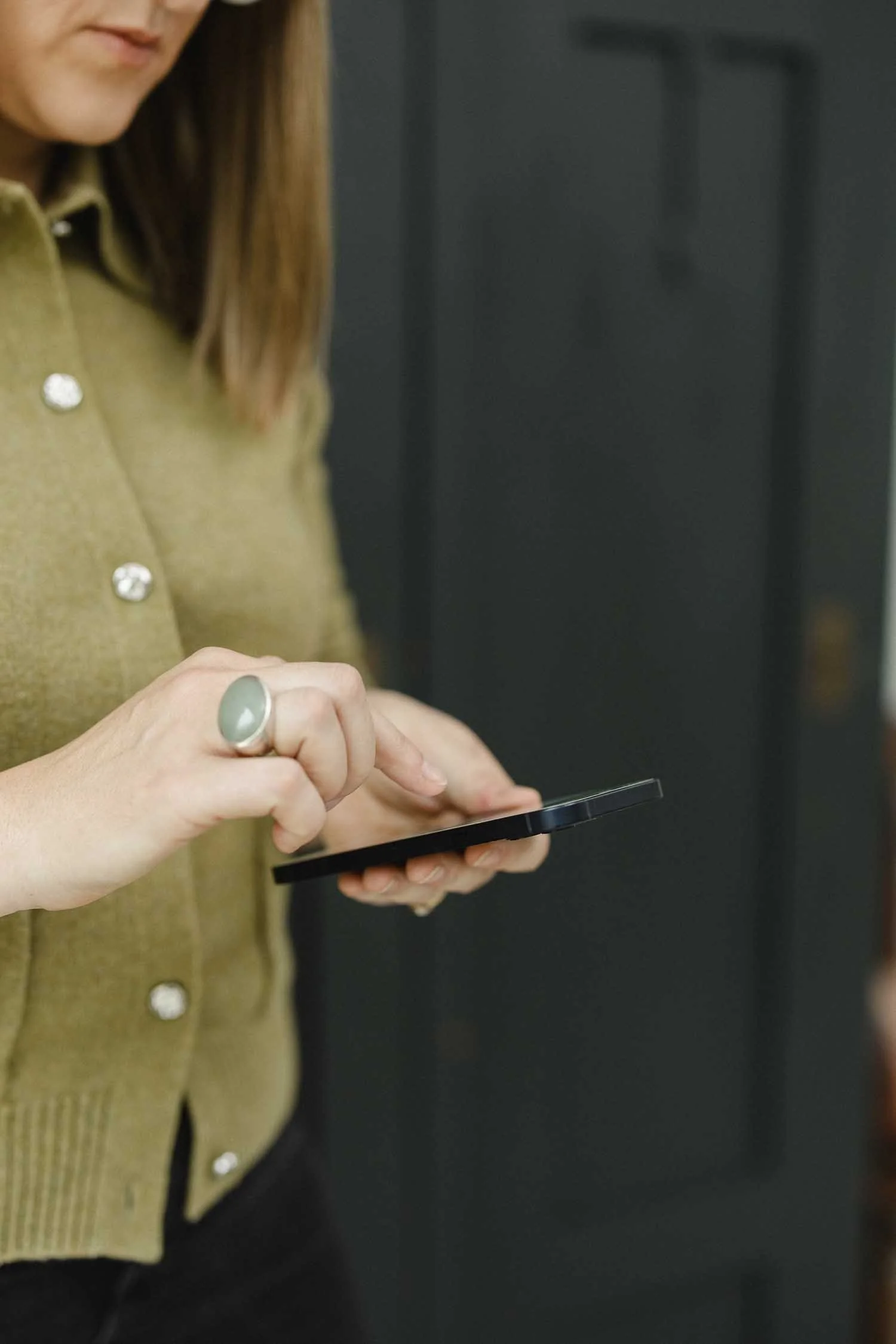
Mobile optimisation is critical because most discovery happens on phones
Most interior designers now appreciate that a significant proportion of visitors use mobile devices to view websites. However, many are unaware of what that means practically.
When interior design clients are in the initial discovery stages, they are more likely to use a mobile to view an interior design website; this is because they are doing some initial research or acting on a whim, perhaps whilst on the go. Consequently, if images are slow to load or layouts feel cramped on the website, those same visitors will disengage quickly - either looking elsewhere or giving up their research session for later.
There are a few ways to work with user’s behaviour so that the UX is as strong as possible. For example, adjusting the layout on mobile view so that the storytelling and user journey is more vertical, in line with the way users are scrolling on devices. This requires an understanding of how desktop and mobile view should differ. Additionally, images need to load fast, so should be well optimised. Font sizes and navigational aids should make it easy for users to thumb between projects.
In short: Good UX keeps attention on the design work by removing everything that gets in the way of it
How do you turn an interior design portfolio into enquiries?
Every project page should subtly reinforce your ideal client type
A common, basic error with an interior design portfolio on your website is to feature all of your work - old, new, good and sometimes things you wouldn’t necessarily do again. This can stem from the pressure to win work or assuming that a broad spread will translate into bookings - by appealing to everyone.
The truth is that less is more and knowing your niche or ideal clients pays off by far. Your portfolio should not just show what you’ve done; it should signal who you do it for. You can reflect this in a number of ways, whether the scale of the project, the way you describe it or the specific context.
When visitors recognise themselves in your work and the potential transformation on offer, they are far more likely to enquire. They don’t care what you can do, so much as whether you can do it for them. This is alignment, not just admiration.
Strategic calls-to-action should appear after emotional engagement points
Sometimes it can feel like we are teaching people to suck eggs or pointing out the obvious, but giving potential clients clear guide rails is the mark of an effective interior design portfolio.
The portfolio on your interior design website isn’t just a place for pretty pictures and warm sentiment - it needs to pull its weight. The job of each project in your portfolio is a prompt to get in touch, not just to think, ‘that’s nice,’ and move on. The best place for a prompt to enquire (a call to action) is after a potential client has been impressed, not at random points on the page. This is typically after strong sequences of imagery or the concluding paragraph of the project.
At that points, your website visitors are more emotionally primed to take action. In contrast, a poorly-timed CTA will feel intrusive and reduce conversion rates - another reason why less is more.
Contextual detail builds trust without overwhelming the page
Another underrated design element on your interior design portfolio is a short section that provides context for your featured client project. Some dismiss this as superficial, opting for a highly minimal design and layout. However, context details are similar to the CTA above: they provide a guide rail for a potential client to be able to assess quickly whether you are a good fit as an interior designer.
Supporting, contextual information should be short and concise: for example, the project location, a brief with the objectives or the scope of interior design services. These all add credibility and ground the case study providing helpful information to the reader that they can assimilate quickly. Crucially, it also reassures potential clients that the work is real, relevant and achievable - generating this sense of trust is critical for winning enquiries.
Overall, these contextual details should support the visuals of your interior design rather than compete with them. Focus on a quick snapshot, rather than a dense explanation.
In short: Enquiries happen when a portfolio signals fit clearly and removes doubt about the next step
What separates a good portfolio from a high-converting one?
High-converting portfolios remove uncertainty about working with you
Uncertainty, friction and confusion are all terminally bad for converting traffic on your interior design portfolio into project enquiries. All of the elements we’ve mentioned so far reduce this: simplicity, clear layout, supporting details and an obvious flow.
A strong portfolio doesn’t just showcase your interior design work; it answers unspoken questions about the process, the scale of works and what makes for a good fit. This reduces hesitation at the enquiry stage and is why we tend to ask ‘what can you strip out?’ rather than ‘what can you add in?’, as bloat on your website tends to be a cover for uncertainty, but it never succeeds.
When potential interior clients feel confident about what happens next and what they are getting themselves into, they are more likely to contact you. If you're not sure whether your current site is creating that confidence or working against it, a consultancy session to review your website strategy is often the quickest way to find out.
Editorial consistency creates a recognisable design identity
It’s said that interior designers often get bored of their own marketing - repeating their messaging and covering the same topics. However, repetition and consistency are critical to a strong portfolio on your website.
The way you present work is part of your interior design brand. Establishing a consistent tone, layout and image style on your portfolio creates a sense of a signature approach. If you're still working out what that signature actually looks like, it's worth reading how interior designers build a distinctive brand identity before you touch the portfolio itself.
Signalling your signature interior design style helps you stand out in a crowded market where many portfolios look visually similar, but lack clear identity.
The best portfolios feel curated, not exhaustive
Once again, less is more: three knockout projects in your interior design portfolio are vastly more impactful and deliver a higher Return On Investment than 12 average ones. Even if there are a couple of excellent projects within the 12, their impact will be diluted. Plus, remember the 80:20 rule: 20% of your projects will typically deliver 80% of your revenue, so why not maximise your gains by publishing solely the top ones?
A smaller number of strong, well-presented projects outperforms a large, rambling archive: curation signals confidence and taste. We saw this play out directly with Ann's rebrand at Middlethorpe Interiors, where narrowing the portfolio down to her strongest work did more for enquiries than adding another dozen projects ever could.
Too much choice causes uncertainty and reduces the overall effectiveness of your portfolio. Curating your interior design projects also helps users focus on your best work without distraction, increasing perceived value.
In short: The best portfolios convert because they narrow choice and increase certainty, not because they show more work
FAQ: Portfolio design for for interior design websites
-
An effective interior design portfolio should include a curated selection of completed projects, each presented as a clear transformation story rather than just finished imagery. Strong portfolios combine outcome-led photography, brief contextual information and a consistent page structure so visitors can quickly understand your style and level of work. The goal is not volume, but clarity and trust.
-
There is no fixed number, but fewer high-quality projects will usually outperform a large mixed archive. Most strong interior design websites focus on a tight selection of work that represents their ideal client type and current level of service. Too many projects dilute positioning and make it harder for potential clients to understand what you are best at.
-
Conversion happens when the portfolio removes uncertainty. This comes from clear storytelling, strong opening imagery, simple navigation and a user journey that naturally leads to an enquiry at the right moment. When visitors can quickly see who the work is for, what the outcomes look like and how to take the next step, they are far more likely to get in touch.
Further reading
Nielsen Norman Group – First impressions matter: the aesthetic usability effect
This explains why users judge credibility almost instantly based on visual polish. It reinforces the point that interior design portfolios are assessed emotionally before anything is read, and that perceived taste often outweighs written explanation.Nielsen Norman Group – How users read on the web (they don’t)
A foundational UX study showing that users scan rather than read. It supports the argument around portfolio structure, image sequencing and why clarity and hierarchy matter more than long descriptions in project pages.CXL - Why High Cognitive Load Is Costing You Conversions (and How to Reduce It)
This breaks down how too much information or poor structure increases mental effort and reduces conversions. This directly supports the points about curated portfolios, simplified navigation and reducing uncertainty before enquiry.
About the author:
Simon Cox is co-founding director of Wildings Studio, a branding, website design and content marketing studio in Torquay, working almost exclusively with design-led businesses like interior designers, garden designers and architects. He writes and edits the Wildings Studio blog, drawing on years spent building websites and brand identities for exactly this kind of client, which is why the advice here comes from what's actually worked, not general theory. If you've just read this and recognised your own portfolio in it, that's the sort of problem Simon and the studio solve every day.
















In this article:
Why a website portfolio is the most important sales tool for interior designers
Free download: The high-converting portfolio worksheet
How should interior designers structure project pages for maximum impact?
What makes portfolio UX effective for interior design websites?
How do you turn an interior design portfolio into enquiries?
About Wildings Studio
Thoughtful, beautiful branding and websites for design-led businesses
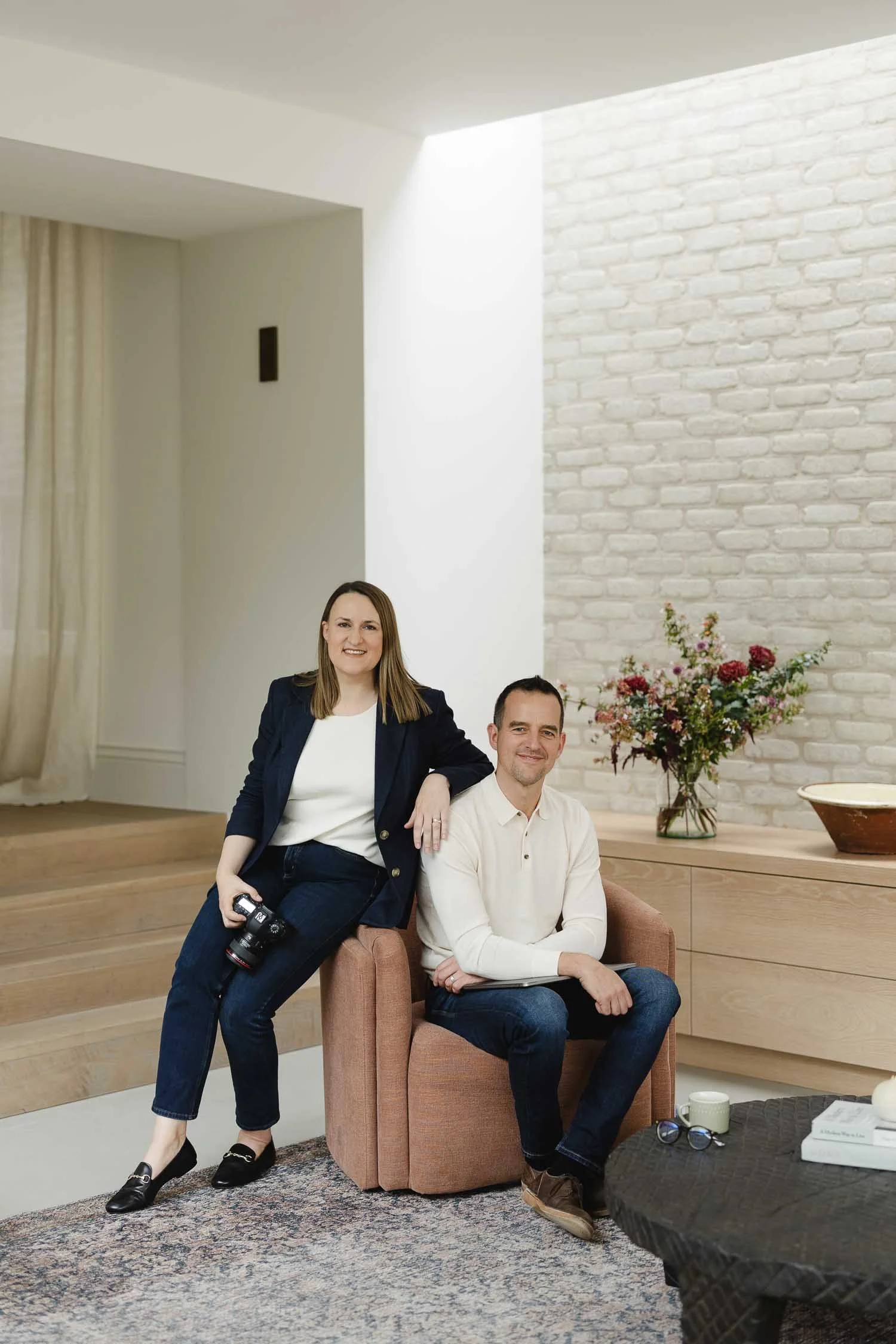
We're a small studio based in South Devon, working with garden designers, interior designers, architects and boutique hospitality brands who care about how their work is presented online. Simon handles brand strategy and website content, Rachael leads the creative and design work, and together we've built a studio that specialises in one thing: making design-led businesses look as considered online as they are in person. If you've just been reading about what makes an interior design portfolio convert, that's exactly the kind of problem our website design work is built to solve.